.jpg)

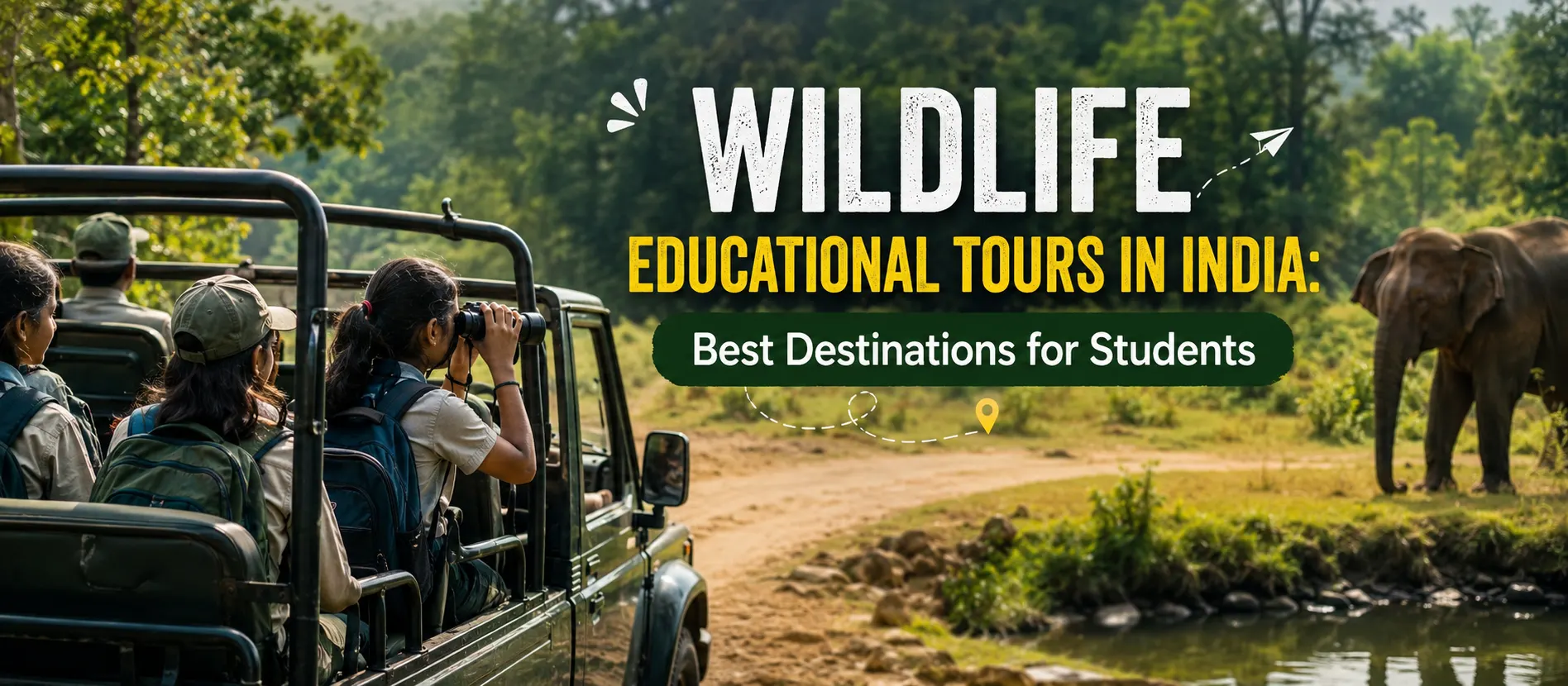
A textbook can explain how a tiger marks its territory with scent. But when students see scratch marks on a tree, animal tracks on the ground, or a naturalist explaining behaviour in a real forest, the lesson becomes much easier to remember. That is the real value of wildlife educational tours in India.
India's national parks and wildlife reserves offer students the chance to explore forests, wetlands, grasslands and mangroves while learning about biodiversity, ecosystems and conservation. From Ranthambore and Kanha to Kaziranga and the Sundarbans, each destination offers a different learning experience.
In this guide, we'll cover the best wildlife educational tours for students, including top destinations, ideal seasons, safety tips, safari planning and how schools can create a meaningful field-learning experience.
What Are Wildlife Educational Tours?
Wildlife educational tours are structured visits to national parks, tiger reserves, wildlife sanctuaries and other natural areas where the primary purpose is learning through direct observation.
A typical wildlife educational tour for students may include:
| ✓ A pre-trip orientation |
| ✓ An introduction to the destination's ecosystem |
| ✓ A safari or guided nature activity |
| ✓ Naturalist- or guide-led interpretation |
| ✓ Birdwatching or species identification |
| ✓ Visits to interpretation centres where available |
| ✓ Field notes, worksheets or observation exercises |
| ✓ A post-trip discussion or student assignment |
The important difference between an ordinary safari and an educational wildlife tour is structure.
A regular safari may focus primarily on seeing animals. An educational safari asks additional questions:
| ✓ Why does this species live here? |
| ✓ What does its habitat provide? |
| ✓ How does it interact with other species? |
| ✓ What threats does the ecosystem face? |
| ✓ How do conservation programmes work? |
| ✓ What role do local communities play? |
Why Wildlife Study Tours Matter for Students
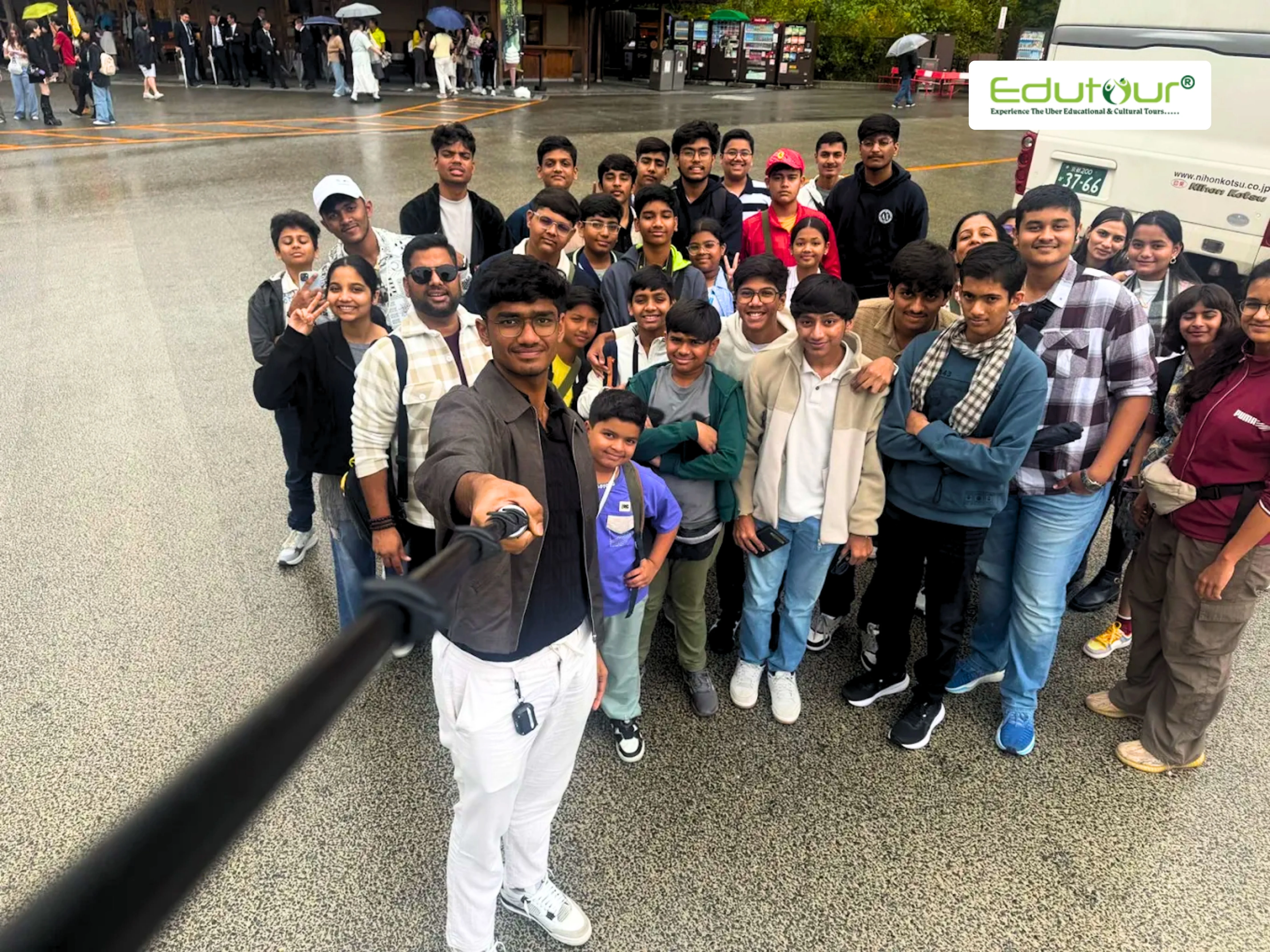
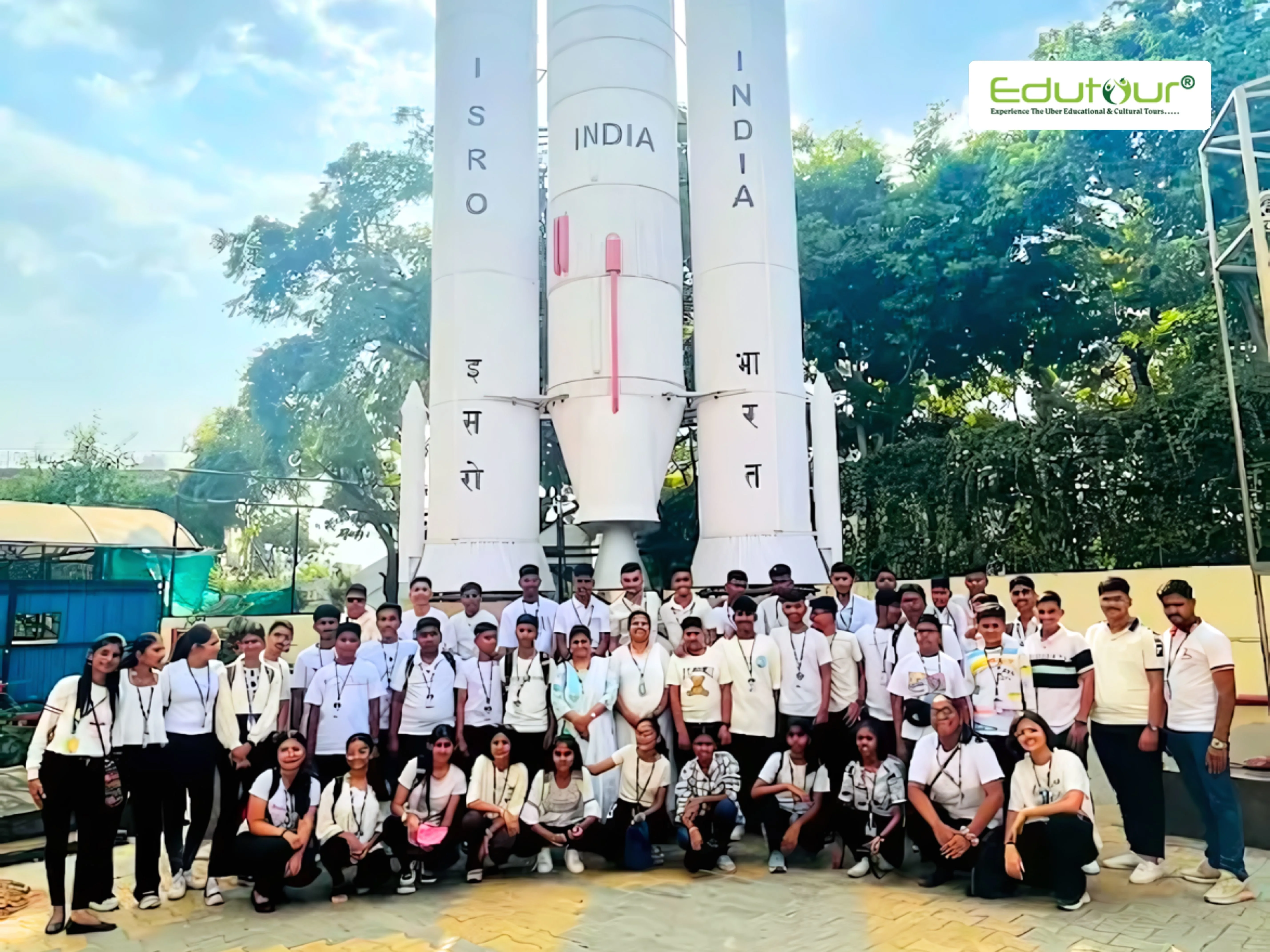
Experiential learning can make classroom concepts easier to understand because students are able to connect what they study with the world around them. The Ministry of Education's material on NEP 2020 highlights experiential learning as an important part of making learning meaningful, relevant and connected to students' lives.
A wildlife field trip fits naturally into that approach.
1. Students see ecosystems functioning in real life
Food chains, predator-prey relationships, adaptation, biodiversity and habitat are easier to discuss when students have actually observed animals and their surroundings.
A langur giving an alarm call, a herd of chital responding to danger or birds feeding around a wetland can turn an abstract lesson into an observation students remember.
2. It connects multiple subjects
A single wildlife destination can support several areas of the curriculum.
| ✓ Biology and EVS: biodiversity, adaptation, food webs, species behaviour and habitats |
| ✓ Geography: forests, wetlands, rivers, grasslands, mountains and coastal ecosystems |
| ✓ Environmental science: conservation, habitat degradation, human-wildlife conflict and climate-related pressures |
| ✓ History: protected-area history, forts, cultural landscapes and traditional relationships with forests |
| ✓ Social science: protected-area management, local communities and conservation policy |
3. It develops field skills
Students can learn how to observe quietly, record evidence, identify species, work in groups and follow instructions in a natural environment. Those skills are difficult to reproduce completely inside a classroom.
4. It creates conservation awareness
Wildlife education should not be reduced to the question, "Did you see a tiger?" A good field programme also explains why protected areas exist, how conservation is managed and why habitat protection matters.
That distinction is important. A successful educational safari is not one where students see the maximum number of animals. It is one where they leave with a better understanding of why those animals and ecosystems need protection.
How a Wildlife Educational Tour Should Be Structured
The strongest school wildlife trips usually have four stages.
1. Pre-Trip Orientation
Before students enter the park, they should know what they are likely to encounter and how they are expected to behave.
The briefing can cover:
| ✓ The park's major habitats |
| ✓ Key species |
| ✓ Basic animal behaviour |
| ✓ Conservation challenges |
| ✓ Safari rules |
| ✓ What students should observe |
| ✓ What they should record during the trip |
A simple species checklist or field worksheet can make this stage much more useful.
2. Guided Safari or Nature Activity
The safari is the central field-learning experience, but the quality of interpretation matters.
Schools should ask who will accompany the students and whether an authorised guide or trained naturalist is included where required. The National Tiger Conservation Authority's tourism guidelines emphasise regulated visitor numbers, authorised guides and responsible visitor behaviour in tiger reserves.
Students should be encouraged to observe more than large mammals. A good naturalist can draw attention to:
| ✓ Bird calls |
| ✓ Tracks and signs |
| ✓ Trees and plant adaptations |
| ✓ Insects |
| ✓ Herbivore behaviour |
| ✓ Predator-prey relationships |
| ✓ Water sources |
| ✓ Signs of human activity |
That makes the safari educational even when a major animal sighting does not happen.
3. Interpretation and Observation Activities
Where available, schools can include:
| ✓ Interpretation centres |
| ✓ Nature walks |
| ✓ Birdwatching |
| ✓ Local biodiversity sessions |
| ✓ Conservation presentations |
| ✓ Forest department interactions |
| ✓ Community-based activities |
The exact activities depend on the destination and permissions available.
4. Post-Trip Learning
This is one of the most overlooked parts of school wildlife travel. A short classroom discussion, field report, presentation or species-identification assignment can help students turn the experience into lasting learning.
Best Wildlife Educational Tours in India for School and College Groups
.webp)
There is no single "best" wildlife destination for every school. The right choice depends on the students' age, curriculum, travel time, budget and the type of ecosystem the school wants to study.
1. Ranthambore National Park, Rajasthan
Best for: Tiger ecology, dry deciduous forests, conservation and history
Ranthambore is one of the most recognisable tiger landscapes in India and can work particularly well for schools travelling from northern India. Its educational appeal goes beyond tigers - the landscape combines dry forest, lakes, rocky terrain and historical features, allowing schools to connect wildlife studies with geography and heritage. Schools travelling from Delhi or nearby states often combine it with a North India group tour package.
Ranthambore's official tiger conservation planning documents also distinguish between 6-seat gypsies and larger safari buses, which is a useful reminder that schools should confirm the current vehicle and permit rules for their specific booking rather than assume that one capacity rule applies everywhere.
Good learning themes: tiger ecology, predator-prey relationships, dry deciduous ecosystems, water availability, protected-area management, wildlife and cultural heritage.
Best suited to: Middle school, secondary school and college groups.
2. Jim Corbett National Park, Uttarakhand
Best for: Forest ecology, elephants, tigers, birds and conservation history
Established in 1936 as Hailey National Park, Corbett has a long history within India's protected-area system. Its varied habitats and wildlife make it a strong destination for students who want to study more than one major species.
The destination can support lessons on forest ecosystems, elephants and large mammals, birds, riverine habitats, conservation history and human-wildlife interactions. Schools should check the current opening status and zone-specific rules before finalising dates because tourism arrangements can differ between zones and seasons.
3. Kanha National Park, Madhya Pradesh
Best for: Forest ecology and species conservation
Kanha is particularly interesting for educational groups because it provides a strong example of species conservation. The hard-ground barasingha is closely associated with Kanha's conservation story, making the park useful for discussing population recovery, habitat management and the importance of protecting specialised habitats. It fits well within a Central India group tour package.
Good learning themes: grassland and forest ecology, deer and predator relationships, species recovery, habitat management, conservation science.
Kanha is an especially good option for older school students and college groups undertaking more structured environmental studies.
4. Bandhavgarh Tiger Reserve, Madhya Pradesh
Best for: Tiger ecology, forest habitats and heritage
Bandhavgarh is another strong option for schools interested in tiger conservation. Its archaeological and historical associations also create opportunities for interdisciplinary trips combining wildlife with heritage.
Possible study themes include tiger behaviour, predator-prey relationships, forest biodiversity, protected-area management, and natural and cultural heritage. As with other Madhya Pradesh reserves, schools should check the current permit calendar and zone availability before fixing the itinerary. The state forest booking system publishes current permit information and booking schedules.
5. Pench Tiger Reserve, Madhya Pradesh
Best for: Biodiversity, forest ecology and shorter field-study programmes
Pench is located in the Satpura landscape and is accessible from several major cities in central India. The reserve can work well for college field studies and school groups looking for a less narrowly tiger-focused itinerary.
Students can study dry deciduous forests, herbivores and predators, birds, water availability, habitat connectivity and protected-area management. The official Pench information notes its accessibility from cities including Nagpur and Jabalpur, while the reserve's tourism season and closure period are subject to the applicable forest-department schedule.
6. Satpura National Park, Madhya Pradesh
Best for: Nature-based learning and lower-intensity wildlife experiences
Satpura can be particularly interesting for groups that want their programme to include more than vehicle-based wildlife viewing. Depending on current permissions and availability, activities may include walking-based experiences and other guided nature activities.
That makes Satpura worth considering for students who need to learn about signs, plants, smaller wildlife and habitat rather than focusing only on large mammals.
7. Tadoba-Andhari Tiger Reserve, Maharashtra
Best for: Tiger ecology, forest biodiversity and conservation
Tadoba-Andhari is an important wildlife destination in Maharashtra and can be practical for groups travelling from central and western India, often paired with a West India group tour package.
A school programme can use the reserve to discuss tigers and prey species, dry deciduous forest, water sources, biodiversity and conservation management. Schools should confirm current safari availability, vehicle rules and entry arrangements before booking because these can change with the tourism season and forest department regulations.
8. Gir National Park and Wildlife Sanctuary, Gujarat
Best for: Asiatic lion conservation
Gir offers something that most tiger reserves cannot: a field study centred on the Asiatic lion. The protected landscape of Gir is the only natural home of the Asiatic lion, making it an especially valuable destination for lessons about restricted habitats, species conservation and population recovery.
Good learning themes: Asiatic lion ecology, conservation of threatened species, dry deciduous and scrub habitats, human-wildlife coexistence, wildlife management.
Gir's main tourism season is seasonal, with the protected area traditionally closing during the monsoon period. Exact dates should always be checked for the year of travel.
9. Kaziranga National Park, Assam
Best for: Rhino conservation, grasslands and wetland ecology
Kaziranga is one of the strongest choices in India for a conservation-focused school wildlife tour, and a natural fit within an East India group tour package.
The park is a UNESCO World Heritage Site and is especially famous for its one-horned rhinoceros. Assam Tourism states that Kaziranga holds around two-thirds of the world's population of the Indian one-horned rhinoceros.
The destination also offers opportunities to discuss grassland ecology, wetlands, rhinoceros conservation, elephants, tigers and floodplain ecosystems. For older students, Kaziranga can become a particularly good case study in how landscapes, seasonal flooding and conservation management interact.
10. Periyar Tiger Reserve, Kerala
Best for: Elephants, lake ecosystems, birds and mixed-age groups
Periyar offers a different style of wildlife experience, typically arranged as part of a South India group tour package.
Boat-based wildlife viewing on the reservoir can give students an opportunity to observe elephants, deer, gaur, birds and other wildlife around the water's edge. Kerala Tourism describes two-hour boating experiences at Thekkady and notes opportunities to observe wildlife and birds around the lake.
This can make Periyar a useful choice for younger students, mixed-age school groups, wetland and water studies, birdwatching and elephant ecology. The exact activities and availability should be confirmed before booking.
11. Sundarbans National Park, West Bengal
Best for: Mangroves, wetlands, climate resilience and human-wildlife coexistence
If the academic objective is coastal geography, mangrove ecology or climate-related environmental studies, the Sundarbans is difficult to beat.
UNESCO describes the Sundarbans as the world's largest mangrove forest and highlights its tidal waterways, wetlands, biodiversity and Bengal tiger habitat.
This makes it an excellent living classroom for studying mangrove adaptations, tidal ecosystems, wetland ecology, cyclones and coastal resilience, human-wildlife coexistence, and conservation and local communities.
The Sundarbans also demonstrates why wildlife education should not always be built around a jeep safari. Its waterways and mangrove landscape require a different type of field experience.
Quick Comparison: Best Wildlife Destinations for Student Groups
| Destination | Best Educational Theme | Ideal For | Typical Planning Window* |
| Ranthambore | Tigers, forests, heritage | School & college groups | Usually cooler months |
| Corbett | Forests, elephants, birds | School groups | Depends on zone/season |
| Kanha | Species conservation | Secondary & college | Seasonal |
| Bandhavgarh | Tigers & biodiversity | Secondary & college | Seasonal |
| Pench | Forest biodiversity | School & college | Seasonal |
| Satpura | Nature observation | School & college | Seasonal |
| Tadoba | Tigers & forest ecology | School & college | Seasonal |
| Gir | Asiatic lion conservation | School & college | Seasonal |
| Kaziranga | Rhino & wetland ecology | Secondary & college | Seasonal |
| Periyar | Elephants, birds & lake ecology | Mixed-age groups | Check current schedule |
| Sundarbans | Mangroves & coastal ecology | Older students | Check current local schedule |
*Wildlife tourism seasons, zone openings, safari availability and closure dates can change. Schools should verify the current schedule with the relevant forest department before confirming travel.
Best Time for Wildlife Educational Tours in India
There is no single best month for every wildlife destination. For many central Indian tiger reserves, the main tourism season falls outside the monsoon period, but exact opening and closure dates vary by reserve.
For example, Madhya Pradesh's current forest booking system publishes specific advance-booking schedules rather than using one universal calendar for every reserve.
October to March
This is often a comfortable period for school travel in many parts of India because temperatures are generally more manageable than peak summer.
It is also a strong period for birdwatching, comfortable field sessions, forest interpretation and general wildlife observation.
March to May
Hotter weather can make field trips more demanding, but dry conditions and reduced vegetation can sometimes improve visibility of wildlife around water sources.
For younger students, however, schools should carefully consider heat, hydration and the timing of safari activities.
Monsoon
Monsoon conditions can affect access, road conditions and tourism operations differently across destinations. Some protected areas or zones close completely, while others may operate under different schedules.
Never choose a school trip date based on a generic "India wildlife season" calendar. Check the specific reserve.
How to Choose the Right Wildlife Educational Tour for Your School
The most expensive safari is not automatically the best educational trip. Before approving an itinerary, ask these questions.
1. Who will teach the students?
Find out whether the safari includes an authorised guide, naturalist or qualified educator as appropriate for the destination. A driver who knows the roads is not necessarily the same thing as an educator who can explain ecology and animal behaviour.
2. What is the learning objective?
The itinerary should answer a simple question: what should students learn from this trip?
| ✓ Understand food chains |
| ✓ Identify common forest species |
| ✓ Study adaptations |
| ✓ Understand conservation programmes |
| ✓ Explore wetland ecology |
| ✓ Study human-wildlife conflict |
3. What happens before and after the safari?
Ask whether the operator provides pre-trip briefing material, worksheets, species checklists, field activities, post-trip discussion and student assignments. If nothing happens before or after the safari, much of the educational value can be lost.
4. What are the current vehicle and permit rules?
Do not assume that every reserve follows the same vehicle capacity. Safari rules are determined by the relevant park or forest authority. NTCA guidance also stresses regulated tourism, carrying capacity, authorised guides and responsible visitor behaviour in tiger reserves.
Ask the operator for the actual vehicle configuration and permit plan for your destination.
5. What is the emergency plan?
Schools should receive clear information about emergency contacts, the nearest medical facility, first-aid arrangements, transport arrangements, student supervision, emergency evacuation procedures and local park rules. Do not rely only on verbal assurances.
Safety Guidelines for School Wildlife Safaris
Wild animals are unpredictable, which is precisely why field rules matter, as covered in more depth in our Safety & Security guidance for mentors.
Students should be briefed to:
| ✓ Remain inside the authorised vehicle when required |
| ✓ Follow the guide's instructions |
| ✓ Avoid loud conversations |
| ✓ Never feed animals |
| ✓ Never attempt to attract wildlife |
| ✓ Avoid sudden movements |
| ✓ Never leave the vehicle unless specifically permitted |
| ✓ Avoid littering |
| ✓ Respect photography restrictions |
| ✓ Stay with the assigned group |
NTCA guidance emphasises visitor discipline around wildlife, including remaining inside vehicles and maintaining silence near animals.
Schools should also maintain appropriate teacher-to-student supervision and ensure that the operator understands that the group consists of school-age travellers.
Common Mistakes Schools Make When Planning Wildlife Tours
| ✗ Choosing a destination only because it has tigers - a tiger sighting is exciting, but it should not automatically determine the destination |
| ✗ Booking before checking the current park calendar - tourism schedules can change without notice |
| ✗ Treating the safari as the entire programme - two or three hours in a vehicle are not enough on their own |
| ✗ Ignoring travel time - a destination that looks close on a map can take several hours from the actual safari gate |
| ✗ Packing too much into one trip - one well-planned ecosystem can teach more than a rushed multi-park itinerary |
| ✗ Focusing on guaranteed sightings - no responsible programme should promise a tiger, leopard, lion or rhino sighting |
If the curriculum is focused on wetlands, birds or coastal ecosystems, Bharatpur or the Sundarbans may be more educationally appropriate than a tiger-first itinerary. And build orientation, observation, discussion and assessment into the plan rather than treating the safari as the whole programme.
What Does a Wildlife Educational Tour Cost?
There is no reliable single price for a school wildlife tour because costs vary significantly by destination, season, group size and accommodation category.
A school quote normally includes some combination of:
| Cost Component | What Affects the Cost |
| Safari permits | Park, zone, season and permit type |
| Safari vehicles | Number of students and current vehicle rules |
| Accommodation | Property category and season |
| Transport | Starting city and distance |
| Meals | Meal plan and accommodation |
| Guides/naturalists | Programme design and group requirements |
| Educational activities | Workshops, walks and interpretation sessions |
| School coordination | Logistics and support requirements |
For a large group, safari vehicles can become a significant cost because the number of passengers permitted per vehicle is controlled by the destination's rules.
The best approach is to ask operators for an itemised quotation, not simply a per-student package price. That makes it easier for the school to compare safari costs, accommodation, transport, educational activities, guide/naturalist services, meals, and taxes and other charges.
Wildlife Educational Tour vs. Regular School Trip
| Factor | Wildlife Educational Tour | Regular School Trip |
| Primary purpose | Curriculum-linked field learning | Recreation and sightseeing |
| Guide | Naturalist/authorised guide where appropriate | General tour guide |
| Pre-trip preparation | Usually included | Often limited |
| Field observation | Structured | Usually informal |
| Worksheets | Can be included | Not always included |
| Post-trip activity | Report, discussion or project | Usually optional |
| Wildlife rules | Strictly governed by park regulations | Not generally applicable |
| Best subjects | Biology, EVS, geography, ecology | Multiple/general |
The difference is not simply the destination. It is how the destination is used for learning - the same distinction that applies to educational tours for school students more broadly.
Suggested 3-Day School Wildlife Tour Structure
A simple three-day itinerary can work well for many school groups.
Day 1: Orientation and Ecology
| ✓ Arrival and check-in |
| ✓ Student orientation |
| ✓ Introduction to the local ecosystem |
| ✓ Safety briefing |
| ✓ Species identification activity |
| ✓ Short teacher-led discussion |
Day 2: Field Observation
| ✓ Early morning safari or guided activity |
| ✓ Breakfast |
| ✓ Rest period |
| ✓ Interpretation centre or educational session where available |
| ✓ Second wildlife activity where appropriate |
| ✓ Student field notes |
Day 3: Consolidation
| ✓ Final nature activity or safari |
| ✓ Student presentations |
| ✓ Species checklist review |
| ✓ Conservation discussion |
| ✓ Field report assignment |
| ✓ Departure |
The exact schedule should be adjusted for the destination, safari timings, student age and park regulations.
Which Wildlife Destination Is Best for Different Subjects?
For Biology
Consider Kanha, Corbett, Ranthambore, Pench or Tadoba. Focus on food chains, adaptation, species behaviour, biodiversity and predator-prey relationships.
For Environmental Science
Consider Kaziranga, Gir, Kanha or the Sundarbans. Focus on conservation, habitat management, species recovery, climate pressures and human-wildlife relationships.
For Geography
Consider Sundarbans, Kaziranga, Periyar or Corbett. Focus on wetlands, rivers, mangroves, forest types, floodplains and landscape processes.
For Interdisciplinary Learning
Consider Ranthambore or Bandhavgarh, where wildlife can be combined with history and cultural heritage.
Why the Sundarbans Is a Particularly Strong Educational Case Study
The Sundarbans deserves special attention because it allows students to see how ecology and human geography intersect.
UNESCO describes the ecosystem as a dynamic landscape shaped by tides, flooding, delta formation and plant colonisation. It also provides habitat for Bengal tigers and numerous other threatened species.
For older students, this opens discussions about mangrove adaptations, coastal erosion, cyclones, climate resilience, fisheries, human settlements, conservation and human-tiger conflict.
It is a good example of why wildlife education does not have to mean "go into a forest and look for animals." Sometimes the most important lesson is understanding the relationship between people, habitat and wildlife.
Why Choose Edutour for Wildlife Educational Tours?
Edutour helps schools and colleges turn wildlife trips into engaging, curriculum-focused learning experiences. The focus is on combining exploration, hands-on learning and well-planned travel so students can understand wildlife, biodiversity and conservation beyond the classroom.
With experience in educational travel, Edutour can help schools plan wildlife programmes based on students' age, learning objectives and destination.
What Edutour Offers
| ✓ Curriculum-focused wildlife experiences |
| ✓ Student-friendly itineraries |
| ✓ Guided nature and safari experiences |
| ✓ Group travel planning and coordination |
| ✓ Focus on safety and experiential learning |
| ✓ Customised programmes for schools and colleges |
Plan your next wildlife educational tour with Edutour and give students an opportunity to learn directly from nature.
Plan a Wildlife Educational Tour for Your Students
Planning a school wildlife tour involves more than arranging transport and booking a safari. The destination, season, permits, accommodation, student age, educational activities, safety arrangements and group logistics all need to work together.
If your school is planning a wildlife educational tour in India, build the itinerary around a clear academic objective first - and then choose the destination that can deliver it.
Ready to plan a school wildlife tour? Contact EduTour today at +91 9694020905, or reach out through our contact page, to request a customised itinerary based on your student group, preferred destination, travel dates and learning objectives.
Key Takeaways
| ✓ Wildlife educational tours turn textbook ecology into direct field observation, improving understanding and retention. |
| ✓ India offers strong destinations for every learning focus - from Ranthambore and Corbett for tigers to Kaziranga and the Sundarbans for wetlands and conservation. |
| ✓ A good wildlife tour has four stages: pre-trip orientation, guided safari, interpretation activities and post-trip learning. |
| ✓ Safety planning, authorised guides, and current permit and vehicle rules matter as much as the destination itself. |
| ✓ The goal is understanding ecosystems and conservation - not a guaranteed tiger, lion or rhino sighting. |
Frequently Asked Questions (FAQs)
Q1. What is a wildlife educational tour?
A wildlife educational tour is a structured visit to a national park, tiger reserve, wildlife sanctuary or other natural area where students learn about biodiversity, ecosystems and conservation through guided field experiences.
Q2. What is the best age for a wildlife educational tour?
There isn't a universal age limit. Middle-school students and older groups can benefit greatly from wildlife field trips, provided the itinerary, travel time and activities are appropriate for their age. For younger students, shorter programmes and less demanding activities may be preferable.
Q3. Which national park is best for a first-time school wildlife trip?
Ranthambore, Corbett and Kanha are among the destinations schools can consider, but the best choice depends on the students' curriculum, starting city, budget and preferred ecosystem. A first trip does not necessarily need to be a tiger-focused trip.
Q4. How many students can go on one wildlife safari vehicle?
There is no single India-wide number that schools should assume applies to every reserve. Vehicle capacity and safari arrangements are determined by the relevant park or forest authority. Some destinations use 6-seat gypsies alongside larger safari vehicles or buses; always confirm the current rule for the specific park.
Q5. Are wildlife educational tours safe for school groups?
They can be, provided the school uses a responsible operator and follows the relevant forest department rules. Safety planning should include authorised guides, appropriate vehicles, student supervision, emergency contacts and clear behaviour rules.
Q6. What is the difference between a wildlife safari and a wildlife educational tour?
A safari primarily provides a wildlife-viewing experience. An educational tour adds structured learning before, during and after the safari, with activities linked to subjects such as biology, geography, environmental science or conservation.
Q7. What subjects can a wildlife educational tour support?
Common subjects include biology, environmental science, EVS, geography, ecology and conservation studies. Some destinations can also support history and social science through cultural landscapes and community-related topics.
Q8. Do schools need permits for wildlife safaris?
Yes, access to protected areas and safari zones is controlled by the relevant authorities, and requirements vary by destination. Schools should confirm the current permit process and documentation requirements before travelling.
Q9. How far in advance should a school book a wildlife tour?
For popular destinations and peak travel periods, early planning is advisable. Schools should check permit availability, accommodation and transport together, since some destinations publish advance booking windows for their tourism season.
Q10. Is the Sundarbans suitable for school groups?
Yes, particularly for older students studying mangroves, wetlands, geography, biodiversity or conservation. Its ecosystem is very different from a conventional jeep-safari destination and offers valuable lessons about tidal environments and human-wildlife relationships.