.jpg)

Introduction: ISRO Tour for Students
India's space programme is one of the most ambitious in the world. From launching satellites on a shoestring budget to landing on the Moon's south pole, the Indian Space Research Organisation has built a track record that few countries can match. For students who are curious about science, engineering, and space, an ISRO tour is one of the most direct ways to understand what that work actually looks like up close.
This guide is for teachers, college coordinators, and students who want to plan an ISRO tour but are not sure where to start, which location to visit, how the permission process works, what you will actually see, and how to make the trip worth the effort.
What is ISRO and Why Does It Matter for Students?
ISRO — the Indian Space Research Organisation — was established in 1969. It operates under the Government of India's Department of Space and runs its headquarters out of Bangalore. In the decades since its founding, it has put communication satellites into orbit, built navigation systems, sent a probe to Mars on its first attempt, and landed a rover near the Moon's south pole.
That last achievement, Chandrayaan-3 in 2023, made India the first country to successfully land near the lunar south pole.
For students, what matters is not just the headline achievements. It is the scale of what ISRO does and the fact that it is accessible. Unlike many defence or research institutions, several ISRO centres actively run student visit programmes. The science happening inside these facilities covers physics, mechanical engineering, electronics, computer science, chemistry, and materials science — all at once. There is almost no STEM subject that does not have a connection to what ISRO does.
Why an ISRO Trip for Students Has Real Value
Most students study physics for years without ever seeing the equations applied to something real. They learn about Newton's laws, thermodynamics, and signal processing in isolation — each topic in its own chapter, tested separately, forgotten quickly. An ISRO trip for students puts all of it in the same room. The rocket on display in front of you uses thermodynamics in its engine, Newton's laws to calculate its trajectory, and signal processing to communicate with the ground. The subject lines stop making sense as separate things.
Beyond the science, there is something harder to quantify. Many students — particularly those from smaller cities or towns — have never met a working engineer or scientist. They know these careers exist the way they know Antarctica exists: technically real but not something they can picture for themselves. Walking through a facility where actual people are building actual hardware changes that. The career stops being abstract.
There is also the question of what sticks. Students remember field trips. Research on how people form memories consistently shows that experiences with physical context — what researchers call episodic memory — are retained longer than information absorbed in a classroom. A student who stood next to a PSLV model at Sriharikota and asked a question about staging will remember that conversation in a way they will not remember the same information from a textbook.
ISRO Tour Locations in India
ISRO Tour Bangalore – ISAC and the HQ Exhibition
Bangalore is where ISRO is headquartered, and it is the most accessible location for a first ISRO tour. The primary point of interest for student groups is the Space Science Exhibition at Antariksh Bhavan, ISRO's headquarters building.
The UR Rao Satellite Centre (URSC), formerly called ISAC, is where Indian satellites are designed, assembled, and tested. Student visits here typically include the exhibition hall, which has display models of Indian satellites — INSAT, IRS series, Chandrayaan, and others — along with interactive exhibits on remote sensing, navigation, and satellite applications.
An ISRO Bangalore industrial visit for college groups may also include a guided walkthrough of satellite assembly areas, depending on what has been arranged in the permission letter. The exhibition hall at Antariksh Bhavan is the most reliably accessible part for all groups. It is open on weekdays and can be visited by school and college groups with prior approval from the Public Relations office.
ISRO Sriharikota Tour – Satish Dhawan Space Centre
The Satish Dhawan Space Centre (SDSC SHAR) on Sriharikota island off the Andhra Pradesh coast is India's only orbital launch facility. Every PSLV, GSLV, and LVM3 launch in the country happens here. The facility has two active launch pads, a massive Vehicle Assembly Building where rockets are integrated vertically, and a network of tracking and telemetry systems.
On non-launch days, student groups with approved visits can see the Vehicle Assembly Building, rocket transport rails, and launch pad infrastructure from permitted viewing zones. The ISRO Sriharikota tour also includes access to the Space Science and Technology Museum inside the campus, which covers the full history of India's launch vehicles with full-scale and scaled models.
For rocket launch viewing, ISRO opens a public viewing gallery during actual launches. Registration is free but done online, and spots fill up within hours of the registration portal going live. Schools that want to bring students for a live launch need to monitor the ISRO website closely in the weeks before a scheduled mission.
Other ISRO Centres Worth Knowing
| ✓ Vikram Sarabhai Space Centre (VSSC), Thiruvananthapuram – Where ISRO's launch vehicles are designed and developed. Most technically dense of all centres. Visits for academic groups are arranged, though access to operational areas is more restricted. | ✓ National Remote Sensing Centre (NRSC), Hyderabad – Processes and distributes satellite imagery for agriculture, forestry, disaster response, and infrastructure planning. Useful for students in geography, civil engineering, or environmental studies. |
| ✓ Space Applications Centre (SAC), Ahmedabad – Focuses on satellite-based applications: weather forecasting, crop monitoring, disaster management, urban planning. Most relevant for geography, environmental science, or data science students. |
Each of these centres manages its own visit schedule. Policies change. Always contact the specific centre directly rather than assuming general ISRO visit guidelines apply uniformly.
What Students Actually See on an ISRO Space Center Visit
Rocket and Satellite Models
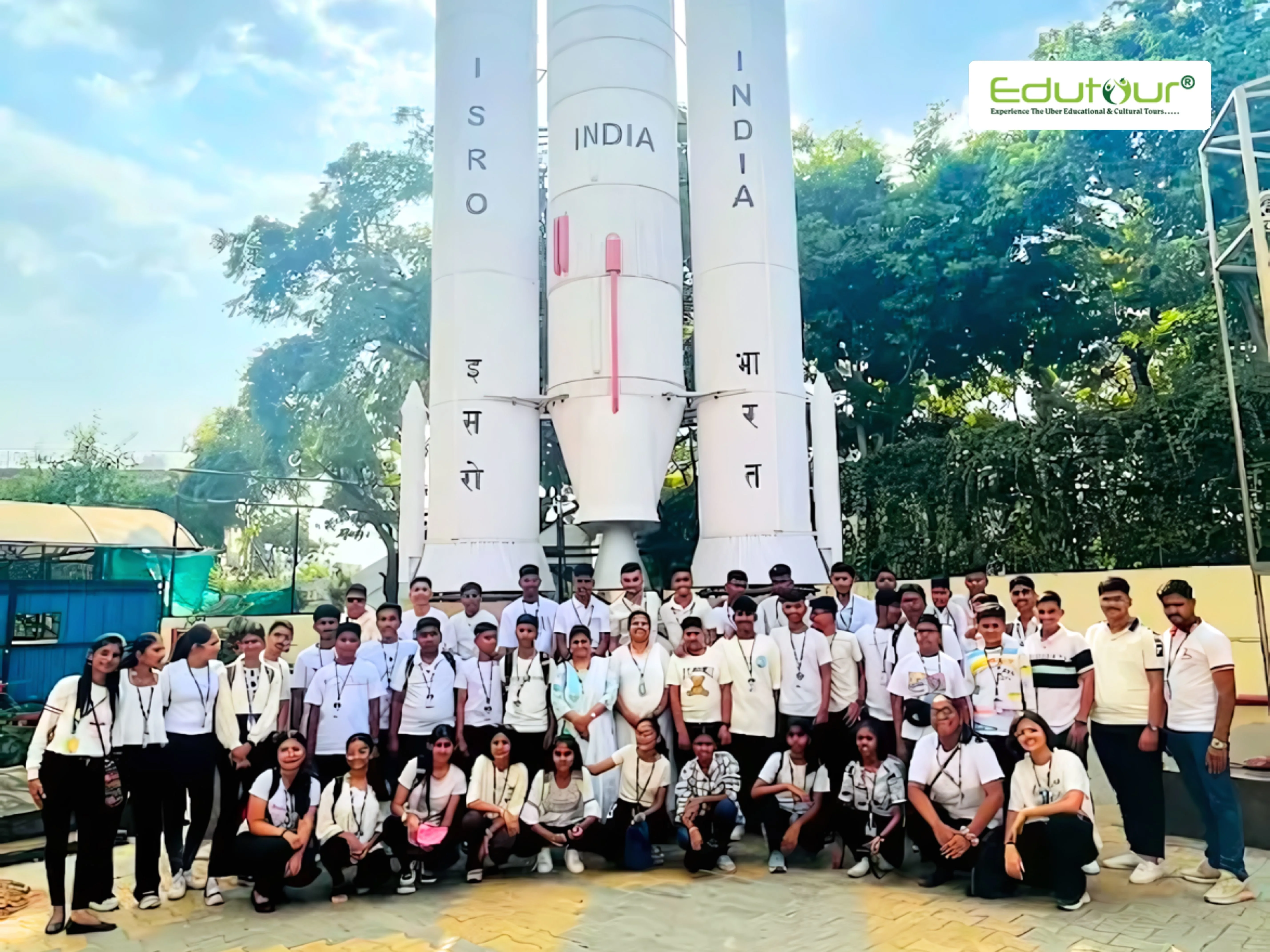
The models on display at both Bangalore and Sriharikota are not small props. Full-scale PSLV models give a concrete sense of just how large these vehicles are — about 44 metres tall, roughly the height of a 14-storey building. Seeing the scale changes how students understand the engineering involved.
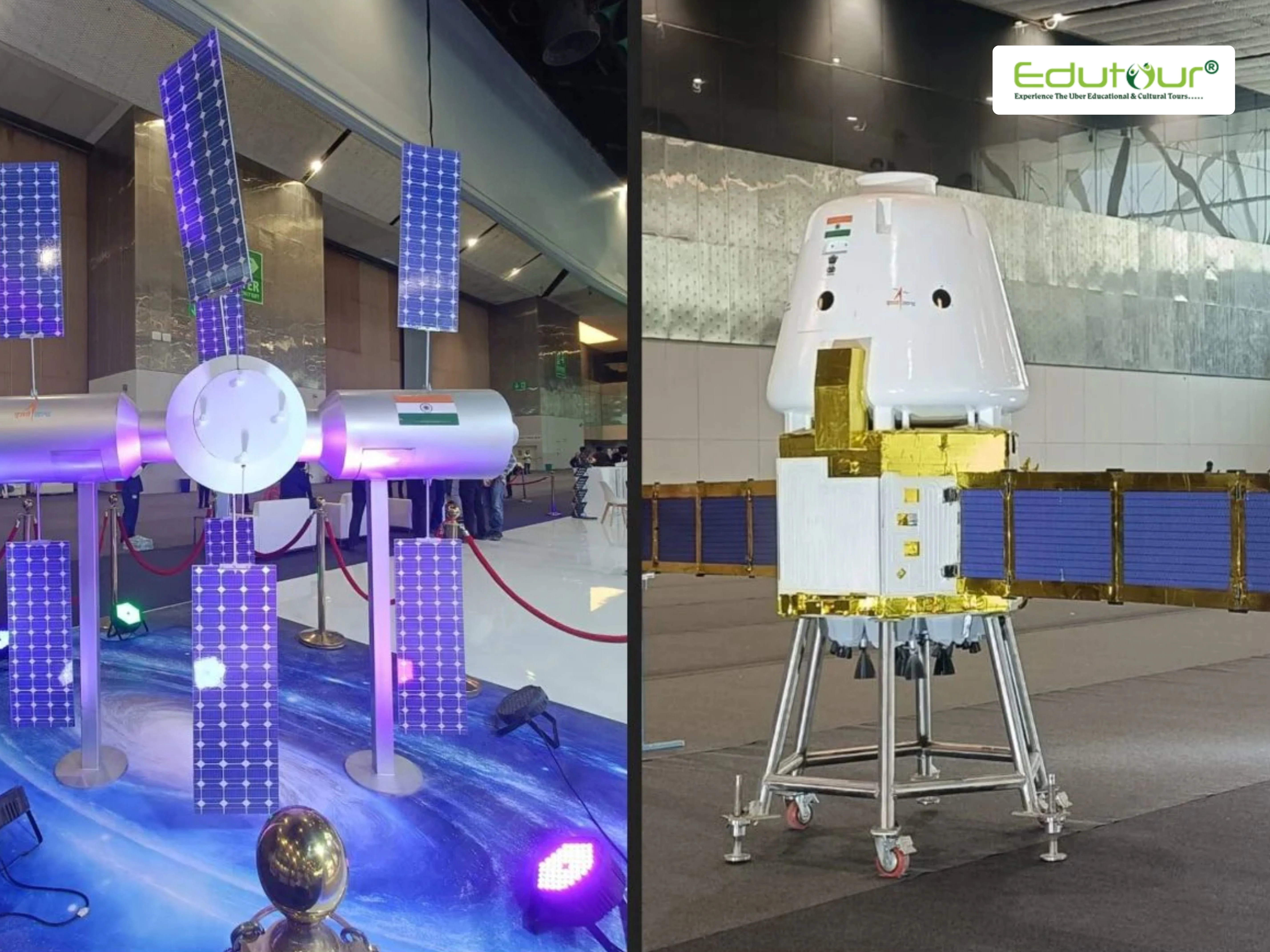
Satellite models show the actual hardware configuration of solar panels, thrusters, antennae, and payload modules in a way that diagrams in textbooks cannot. Guided explanations at both locations connect what students are seeing to the concepts they study in class.
Launch Pad Visit at Sriharikota
The ISRO launch pad visit at Sriharikota is the most striking part of the trip for most students. The First Launch Pad (FLP) and Second Launch Pad (SLP) are the only two operational orbital launch sites in India. Students view them from permitted zones — not from inside the pad itself — but the infrastructure visible from those distances is still considerable.
The umbilical tower, flame duct, propellant storage systems, and the rail transport system used to move integrated rockets from the assembly building to the pad are all visible. For engineering students, the systems design involved in moving a 640-tonne rocket safely and reliably is itself worth studying.
Space Science Exhibitions
The Space Science and Technology Museum at Sriharikota is more detailed than most government science exhibits. It covers India's space history chronologically — from the early sounding rocket launches at Thumba in Kerala in the 1960s through to current missions. The exhibits on rocket propulsion, orbital mechanics, and satellite communication are well-labelled and accessible to Class 10 students upwards.
The exhibition at Antariksh Bhavan in Bangalore is smaller but focuses more on satellite applications — which makes it particularly relevant for students interested in how space technology affects daily life on the ground.
ISRO School Trip – How the Process Works
Who Can Visit and When
The exhibition areas at Bangalore and Sriharikota are open to student groups from roughly Class 8 onwards. For more technical visits inside satellite assembly areas or near launch infrastructure, groups are typically Class 10 or above, and science stream students are prioritised.
College groups pursuing engineering, physics, electronics, or related disciplines get access to more detailed areas of the facilities. Postgraduate and research groups can sometimes arrange visits to active labs, depending on what the institution's faculty contact has communicated to ISRO.
There is no strict upper age limit. The visit format simply shifts — a Class 8 group gets an exhibition tour with explanations pitched accordingly; a third-year B.Tech group gets a walkthrough with technical depth.
How to Apply for an ISRO School Trip
| ✓ Step 1: Write a formal request letter from the school principal or faculty member to the Public Relations Officer of the specific ISRO centre. Include school name, number of students, grades, preferred dates, purpose of visit, and accompanying teacher's name. | ✓ Step 2: Submit the letter. Most centres accept requests by email. Contact details for each centre's PR office are available on the ISRO website. |
| ✓ Step 3: Wait for a response. Some centres respond within two weeks. Others take longer, particularly during periods when launches are being prepared. Following up once after two weeks is fine. | ✓ Step 4: Receive the permission letter. Once approved, ISRO sends a formal permission letter specifying the date, time, and conditions of the visit. This letter must be carried on the day. |
| ✓ Step 5: Arrange logistics independently. Transport, accommodation, and meals are not provided by ISRO. Schools travelling from outside Bangalore or Andhra Pradesh need to arrange all of this separately. |
.webp)
.webp)
ISRO Industrial Visit for College Students
How It Differs from a School Trip
A school trip to ISRO is primarily observational. A college industrial visit to ISRO is expected to be more analytical. Students are supposed to connect what they see with what they are studying — whether that is propulsion thermodynamics, control system design, digital signal processing, or systems integration.
Many colleges require a formal visit report as an academic deliverable. Some attach the industrial visit to credit requirements for specific courses. This means the visit needs to be planned with specific learning objectives, not just treated as a day out.
The depth of access also tends to be greater for college groups. When a faculty member writes a request letter that clearly articulates which semester, which subjects, and what specific questions students are trying to answer through the visit, ISRO's coordinators can arrange a more relevant walkthrough.
Planning an ISRO Industrial Visit for Colleges
| ✓ Group size: Groups of 30 to 50 work most smoothly. Larger groups are often split into batches for the walkthrough, which affects the schedule. | ✓ Specificity: Mention the programme (B.Tech ECE, M.Sc Physics, etc.), the semester, the subjects currently being studied, and what students are expected to observe or document. A specific request gets a more specific response. |
| ✓ Lead time: Start the correspondence 6 to 8 weeks in advance. Engineering colleges near Bangalore or Thiruvananthapuram often have existing faculty contacts at ISRO, which speeds things up. If your college does not, start early. | ✓ Post-visit deliverables: Plan the report format before the trip. Giving students a structured observation checklist on the day significantly improves the quality of what they submit afterwards. |
ISRO Tour Packages – What to Expect
Getting permission to visit ISRO is one part of the planning. Getting 40 students from Jaipur or Mumbai to Bangalore or Sriharikota, housing them, feeding them, and bringing them back without incident is the other part — and it is where most of the coordination work actually sits.
Group Tour vs Individual Visit
Individual students cannot walk into an ISRO centre. All visits require institutional affiliation and prior written approval. Group tours are the only format that works.
Many schools and colleges use an educational travel operator to handle the logistics. A well-run ISRO tour package covers the application correspondence, transport, accommodation, local transfers, and schedule management — which frees the accompanying teachers to focus on the students rather than the logistics.
What a Solid ISRO Tour Package Includes
| ✓ Return travel (train, flight, or AC bus depending on origin and budget) | ✓ Meals included (breakfast and dinner at hotel; lunch at or near the facility) |
| ✓ Hotel accommodation in twin or triple sharing | ✓ Travel insurance for the group |
| ✓ Local transport for all transfers — airport/station to hotel, hotel to ISRO, and back | ✓ A visit report framework for students to complete after the tour |
| ✓ Entry coordination and an academic guide at the ISRO facility |
Optional additions that work well alongside an ISRO visit: the HAL Aerospace Museum in Bangalore (India's aviation history, with actual aircraft on display), the Jawaharlal Nehru Planetarium in Bangalore, or the Birla Science Museum in Hyderabad if the group is routing through there.
Educational Benefits of Space Science Trips
The value of space science educational trips extends beyond what students see on the day. Studies on experiential learning consistently show that students retain information better when it is linked to a direct sensory experience.
| ✓ Long-term Retention: Students who visit science institutions report stronger memory of the concepts they observed, even months later. The context of having seen something real acts as an anchor for abstract concepts. | ✓ Teacher Effectiveness: Teachers who accompany students on these visits return with concrete examples they can use in future lessons. "Remember when we saw the PSLV model at Sriharikota?" is a more effective instructional cue than a diagram. |
| ✓ Subject Interest: A significant number of students who later pursue engineering or science careers report that a school trip to a research institution was part of what shaped their direction. | ✓ Collaborative Learning: Travelling together, observing together, and discussing what they see builds group cohesion among students. It is a different kind of learning from sitting in rows. |
| ✓ Exposure to Careers: Many students — particularly those from smaller towns or schools with limited science infrastructure — have never met a working scientist or engineer. Seeing actual professionals at work normalises these careers and makes them feel achievable. |
.webp)
.webp)
How Edutour Can Help You Plan an ISRO Tour
Planning an ISRO tour for students sounds straightforward until you are actually doing it. Writing the permission letter, following up with the right ISRO office, booking trains or flights for 40 students, arranging hotels near Bangalore or Sriharikota, sorting local transport, managing meal schedules, keeping parents informed — and still making sure the visit actually has academic value on the day. It adds up fast.
Edutour is a specialist educational travel operator that works exclusively with schools and colleges across India. We have handled ISRO group tours for student batches from Rajasthan, Gujarat, Maharashtra, Delhi and beyond. The process is familiar to us. The ISRO permission process, the best accommodation options near each centre, the right timing for Sriharikota visits, the add-on science attractions in Bangalore that are worth including. We have done this enough times to know what works and what wastes a day.
| ✓ Permission Coordination: We draft and submit the formal request letter to the relevant ISRO centre on your behalf. We follow up, track responses and confirm visit slots. You do not have to figure out which officer to contact or how to phrase the request for maximum effectiveness. | ✓ Academic Add-Ons: Alongside the ISRO visit, we can include the HAL Aerospace Museum, Jawaharlal Nehru Planetarium or Visvesvaraya Industrial and Technological Museum in Bangalore, depending on the group's schedule and interests. |
| ✓ Complete Travel Arrangements: Return travel by train, flight or AC bus depending on your city and budget. Everything is booked as a group with proper documentation for school records. | ✓ Documentation Support: Visit report templates, consent form formats, group travel insurance and photo permission guidelines. All provided before departure. |
| ✓ Accommodation and Meals: Hotels close to the visit location in twin or triple sharing. Breakfast and dinner at the hotel. Lunch arrangements on the visit day. No last-minute scrambling. |
If you are a school coordinator, college faculty member or trip organiser looking to plan an ISRO educational tour, reach out to EduTour with your group size, preferred dates and city of origin. We will take it from there.
Conclusion
An ISRO tour for students is not a complicated thing to arrange, but it does require planning. The permission process has clear steps. The locations each offer something different. Bangalore is more accessible and covers satellite work. Sriharikota is further but offers launch infrastructure and the possibility of watching an actual rocket leave the ground.
Whether you are planning an ISRO school trip for Class 11 students, a college industrial visit for an engineering batch or a multi-day ISRO space science tour combining Bangalore and Sriharikota, the basic approach is the same. Apply early, be specific about what you need, prepare students before the visit and give them something concrete to do while they are there.
FAQs
1. Can a student visit ISRO individually, without a school or college group?
No. ISRO centres are active research facilities, not public attractions. Every visit requires a formal written request from a school principal or college faculty member. Individual students cannot get access on their own regardless of age or academic background.
2. Is there an entry fee for an ISRO tour?
ISRO does not charge entry fees for approved student groups at Bangalore or Sriharikota. Nearby add-on venues like planetariums or aerospace museums have their own ticket prices, so factor those in while planning the trip budget.
3. How long does a typical ISRO visit take?
Most visits run 3 to 5 hours. Groups with access to satellite assembly areas or launch pad zones may need up to 6 hours. Schools combining the visit with nearby attractions usually plan a full day of 8 to 9 hours.
4. When is the best time to visit ISRO Sriharikota?
October to February works best. Sriharikota is a coastal location and summer heat between April and June can be uncomfortable for outdoor visits. Bangalore has a stable climate and can be visited any time of year.
5. How does rocket launch viewing registration work?
Before each mission, ISRO opens a free online registration portal on its official website. Schools must register as a group. Monitor the ISRO website regularly since registration windows open without much advance notice.
6. What should students wear and carry?
Comfortable walking clothes work fine. Every student must carry a valid school or college photo ID. The original ISRO permission letter is required at the entry checkpoint. Photography is restricted inside most areas so brief students on this before departure.
7. Can arts or commerce students benefit from an ISRO visit?
Yes. Beyond the science, ISRO's operations involve financial planning, procurement, public communication and policy decisions. Students from commerce, economics or management backgrounds will find real relevance in how a large government space programme is planned and run.