.jpg)

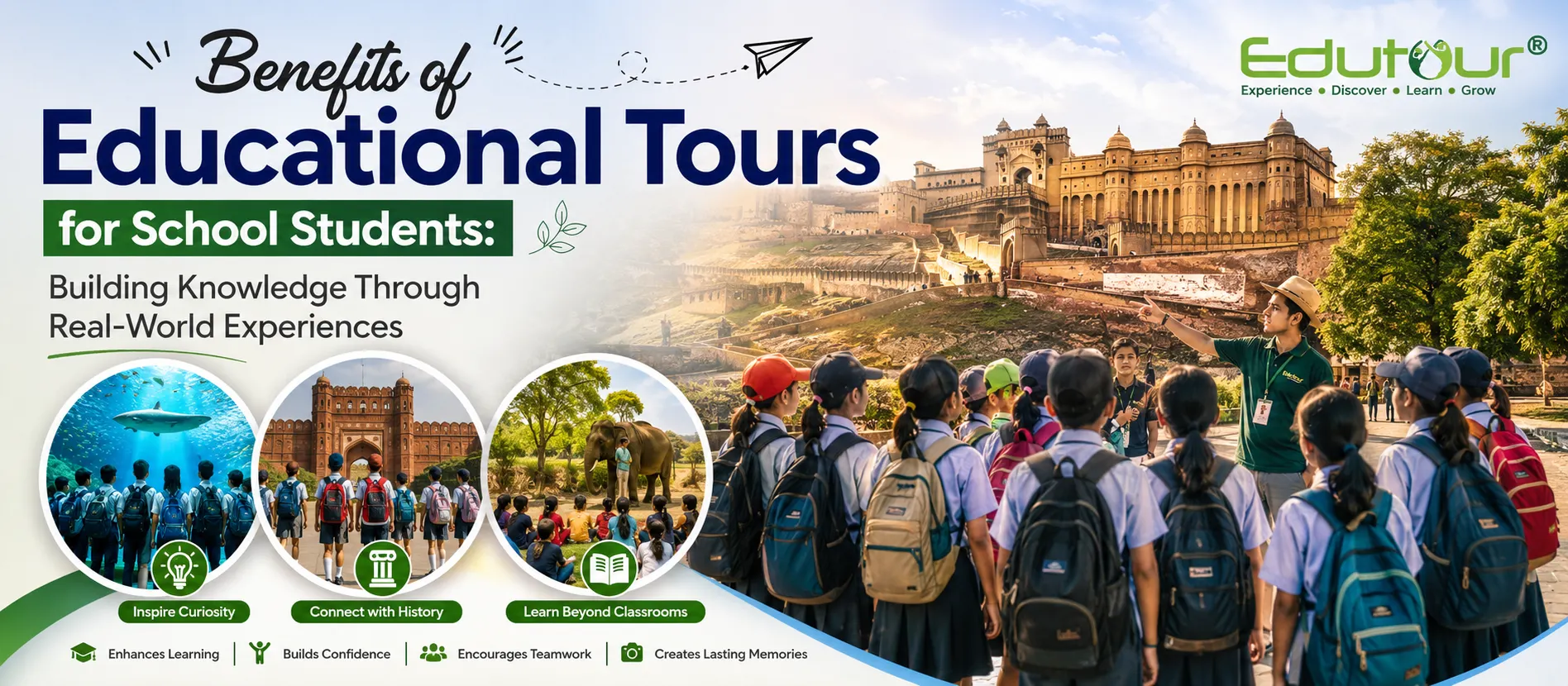
Classroom teaching gives students the theory. Educational tours for school students give them the proof. A student can read about a Mughal fort for weeks, but the moment they walk through one and notice the thick walls, the narrow passages built for defence, the way light falls through a jharokha - that's when the chapter finally makes sense. The information stops being something to memorise for a test and becomes something they actually saw and touched.
Most parents and teachers already know this without needing research to back it up. A child comes back from a school trip and talks about it for weeks. The same child rarely talks about a chapter they studied for an exam with that kind of enthusiasm. That gap is exactly why schools across India have been putting more weight behind educational tours for school students in their academic calendars - not as a once-a-year outing before summer break, but as a planned part of how students learn.
This article looks at the benefits of educational tours in practical terms: why they work so well for student development, which destinations across India are actually worth the effort, and how a school can plan one properly without last-minute scrambling or safety gaps.
Understanding Educational Tours: Meaning, Objectives & Types
Definition of Educational Tours
An educational tour is a planned, curriculum-linked trip where students visit a location outside the classroom to observe, experience, or interact with subject matter directly. It's not the same as a picnic or a fun outing. Every stop on a properly run tour is chosen for a reason - history, science, geography, ecology, civic understanding, or career exposure - and that reason should be obvious to anyone looking at the itinerary. A trip only earns the "educational" label when there's a clear purpose driving it, not just a change of scene.
Objectives of Educational Tours
There's a fairly consistent set of goals schools use to justify and shape these trips:
| ✓ Connecting textbook concepts to real, observable environments so students understand why something matters, not just what it's called |
| ✓ Building independence and social skills outside the home and classroom |
| ✓ Exposing students to careers, industries, and institutions they might never otherwise see |
| ✓ Strengthening memory retention through direct experience instead of repetition |
| ✓ Turning curiosity and observation into habits, not one-off moments |
Types of Educational Tours
Not every tour is chasing the same outcome, and knowing the categories helps schools pick the right fit.
| Tour Type | Primary Focus | Typical Age Group |
| Historical Tours | Heritage, culture, civics | Middle to senior school |
| Science & Technology Tours | STEM concepts, innovation | All grades |
| Nature & Wildlife Tours | Ecology, environment | Primary to senior school |
| Industrial Visits | Career exposure, real-world processes | Senior school |
| Adventure & Camping Tours | Physical skills, teamwork | Middle to senior school |
In practice, most schools blend more than one category into a single trip. A Jaipur tour can cover historical forts, a craft workshop, and a bit of local ecology without feeling stretched thin - which is exactly why it works.
Why Educational Tours Are Important for School Students
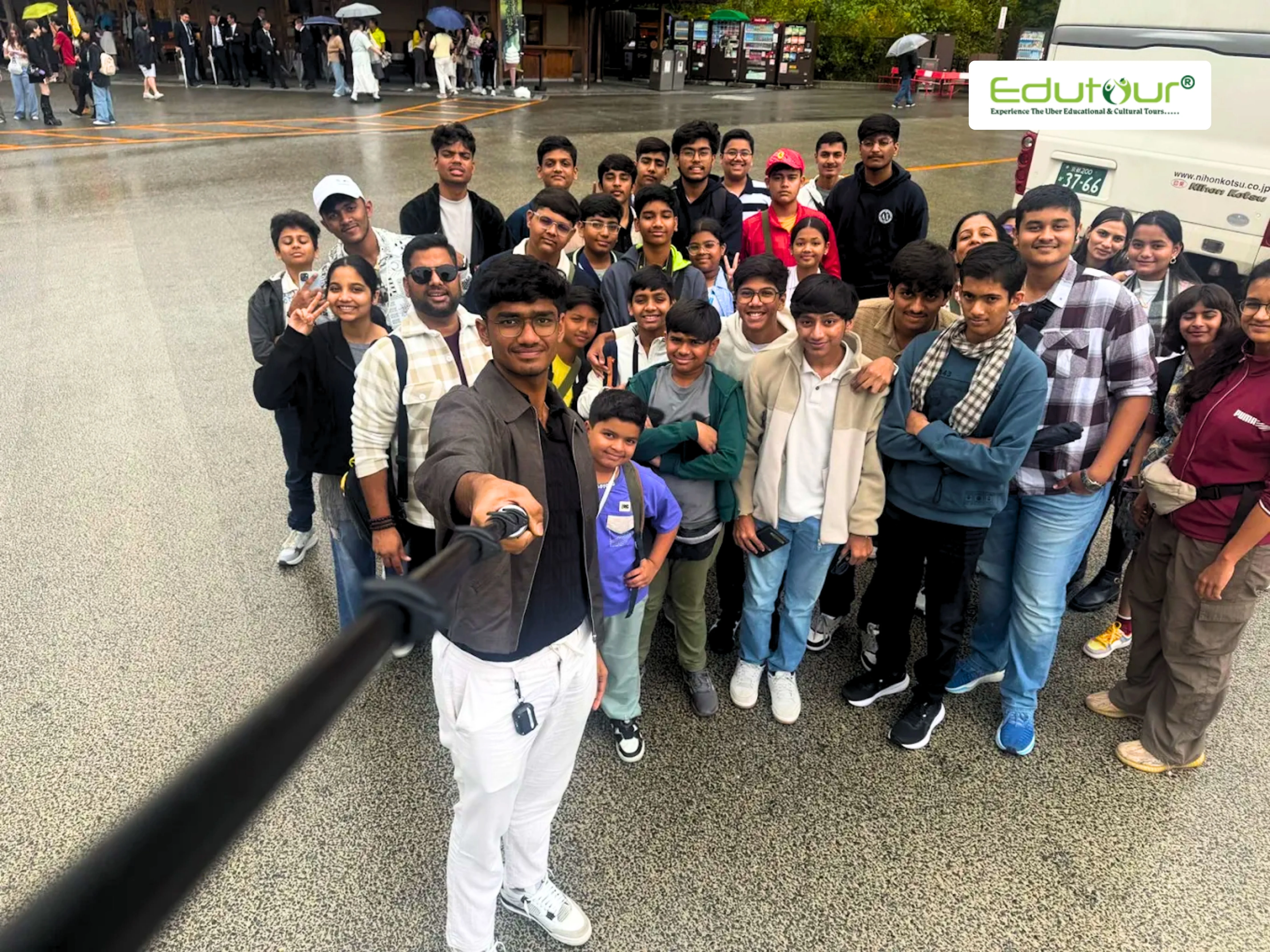
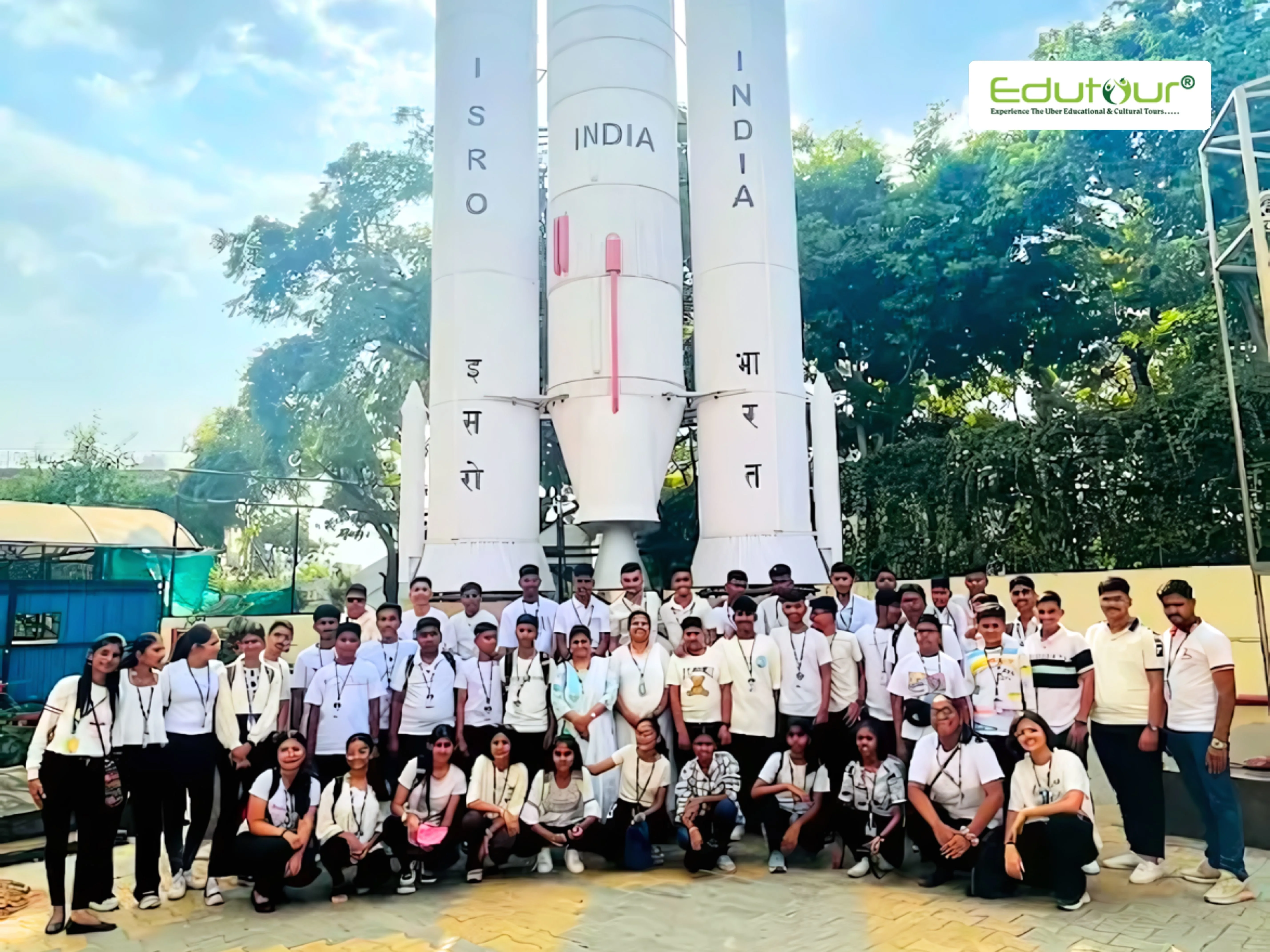
The importance of educational tours comes down to one simple gap: classrooms teach concepts, but they rarely teach context. A geography lesson on rivers is one thing. Standing at a riverbank and actually watching erosion happen is another. A chapter on Mughal architecture is fine on paper, but walking through a fort built in that period and noticing the defensive design choices yourself sticks in a way the paper never does. That's the core of experiential learning - students hold on to what they experience far longer than what they only read or hear, because the brain simply files multi-sensory experiences differently from passive information.
There's also a side to this that has nothing to do with marks. Tours put students in front of environments, people, and situations that build confidence and adaptability - the kind of thing a classroom, by its very nature, can't fully offer. A student who's had to navigate an unfamiliar city with classmates, ask a museum guide a question, or manage their own schedule for a day brings that experience back with them, and it shows up in how they handle classroom challenges afterward too.
Top 15 Benefits of Educational Tours for School Students
1. Makes Learning Practical
A diagram of a turbine in a textbook is abstract. Watching one operate during an industrial visit makes the whole mechanism click almost instantly - no further explanation needed.
2. Improves Knowledge Retention
Because tours engage multiple senses at once, students tend to remember details from a single day's trip months later, while classroom content from the same period fades without regular reinforcement.
3. Enhances Critical Thinking
When a student sees a conservation project in person, they start asking why certain methods are being used instead of just accepting the answer given in class. That shift toward independent reasoning is one of the quieter but more valuable outcomes of a tour.
4. Develops Communication Skills
It's common for a student who barely speaks up in class to become far more talkative once they're in an unfamiliar setting with something specific to ask about. Guides, locals, and even peers all become people to interact with, and that practice builds confidence in speaking up.
5. Builds Teamwork
Managing a schedule, splitting small tasks, waiting for one another at a checkpoint - none of this feels like a "group project," but it teaches the same coordination skills, and often more effectively.
6. Increases Confidence
Students who manage themselves reasonably well over a two-day trip often carry that self-assurance straight into their next classroom presentation.
7. Encourages Independence
Packing correctly, keeping track of belongings, following a schedule without a parent reminding them - these are small responsibilities, but they build real independence over time.
8. Improves Problem-Solving Skills
A delayed bus, a sudden change in weather, a missed stop - these small disruptions during travel force students to think on their feet in a way a fixed classroom routine simply doesn't.
9. Promotes Cultural Awareness
Seeing a different region's traditions, food, and history up close builds tolerance and appreciation that a textbook chapter rarely manages on its own.
10. Inspires Career Awareness
Watching an engineer, a scientist, or a museum curator actually at work often plants a career interest that no classroom counselling session comes close to matching.
11. Develops Leadership Skills
Someone in the group always ends up coordinating the others, keeping track of a younger student, or steering a discussion. It happens naturally, and it's an early form of leadership practice.
12. Encourages Curiosity
New surroundings pull more questions out of students than a familiar classroom ever does - and that curiosity tends to outlast the trip itself.
13. Reduces Classroom Stress
A break from the usual academic pressure, combined with movement and exploration, gives students a genuine mental reset. Teachers often notice sharper focus in the weeks right after a well-run tour.
14. Creates Lifelong Memories
Ask most adults about a school trip years later, and they'll remember more of it than they remember from an entire term of lessons.
15. Supports Overall Personality Development
Put all of this together, and what you get is a more well-rounded, socially confident, curious student - an outcome that's hard to grade but easy to notice.
How Educational Tours Improve Student Learning
Learning by Observation
Watching a potter at work, a museum exhibit in motion, or an ecosystem functioning in real time builds understanding faster than any diagram. Observation also trains students to notice sequence and cause-and-effect in a way written descriptions tend to flatten out.
Hands-on Experience
Science museums and planetariums, in particular, let students test a concept themselves rather than just watch someone else demonstrate it. Pressing a button and seeing a reaction happen builds understanding that actually sticks.
Better Memory Retention
Multi-sensory, experience-based learning consistently outperforms passive classroom instruction for long-term recall. Sight, sound, movement, even smell - a tour gives the brain far more to anchor a memory to than a textbook page ever will.
Interactive Learning
A good guide doesn't just recite facts. They adjust the explanation based on what students ask, which ends up mirroring effective one-on-one teaching far more closely than a standard classroom lecture does.
Real-World Applications
Once a student sees irrigation, manufacturing, or conservation actually happening, the old "when will I ever use this" question tends to disappear on its own.
Educational Tours vs Traditional Classroom Learning
| Aspect | Traditional Classroom | Educational Tour |
| Learning Style | Passive, lecture-based | Active, experience-based |
| Retention | Short-term, exam-focused | Long-term, memory-linked |
| Skill Building | Academic knowledge | Academic + social + practical skills |
| Engagement | Structured, uniform | Varied, exploratory |
| Real-World Context | Limited | Direct exposure |
Neither approach replaces the other, and it's worth being clear about that. Classroom learning lays the foundation - vocabulary, sequence, structure. Educational travel is where students test that foundation against something real. Schools that treat the two as complementary, timing tours to line up with specific chapters in the syllabus, tend to get the most academic value out of the trip.
Importance of Educational Tours in Schools
Schools that build a school educational tour into their annual calendar consistently see better classroom engagement once students are back. Students return with reference points - a place, a person, a process they saw firsthand - that teachers can point to later. A geography teacher can bring up a river system the class actually visited instead of a diagram on the board. A science teacher can refer back to an exhibit students touched, not just read about. This is part of why the importance of educational tours in schools has kept growing across CBSE, ICSE, and state board institutions in India, with more schools now treating at least one structured tour per year as standard rather than optional.
Best Educational Tours for School Students
Historical Places
Forts, monuments, and heritage sites bring history to life in a way photographs never manage, letting students study architecture and craftsmanship up close.
Science Museums
Interactive exhibits turn abstract formulas into something students can actually see and manipulate with their own hands.
Planetariums
A guided sky show makes orbits, scale, and distance click in a way a printed diagram simply cannot.
Wildlife Sanctuaries
Direct exposure to an ecosystem lets students observe animal behaviour and habitat interaction firsthand, something no biology diagram fully captures.
Industrial Visits
Factory and production visits give senior students an early, honest look at real-world processes and the careers connected to them.
Universities
Campus visits help senior secondary students get a real sense of academic life and facilities before they have to decide where to apply.
Cultural Heritage Sites
Temples, local crafts, and traditional practices build an appreciation for regional and national culture that pairs well with what students cover in social studies.
Adventure Camps
Trekking, camping, and outdoor activities build resilience, teamwork, and discipline - a good complement to the more academic tour types.
Best Educational Tour Destinations in India
.webp)
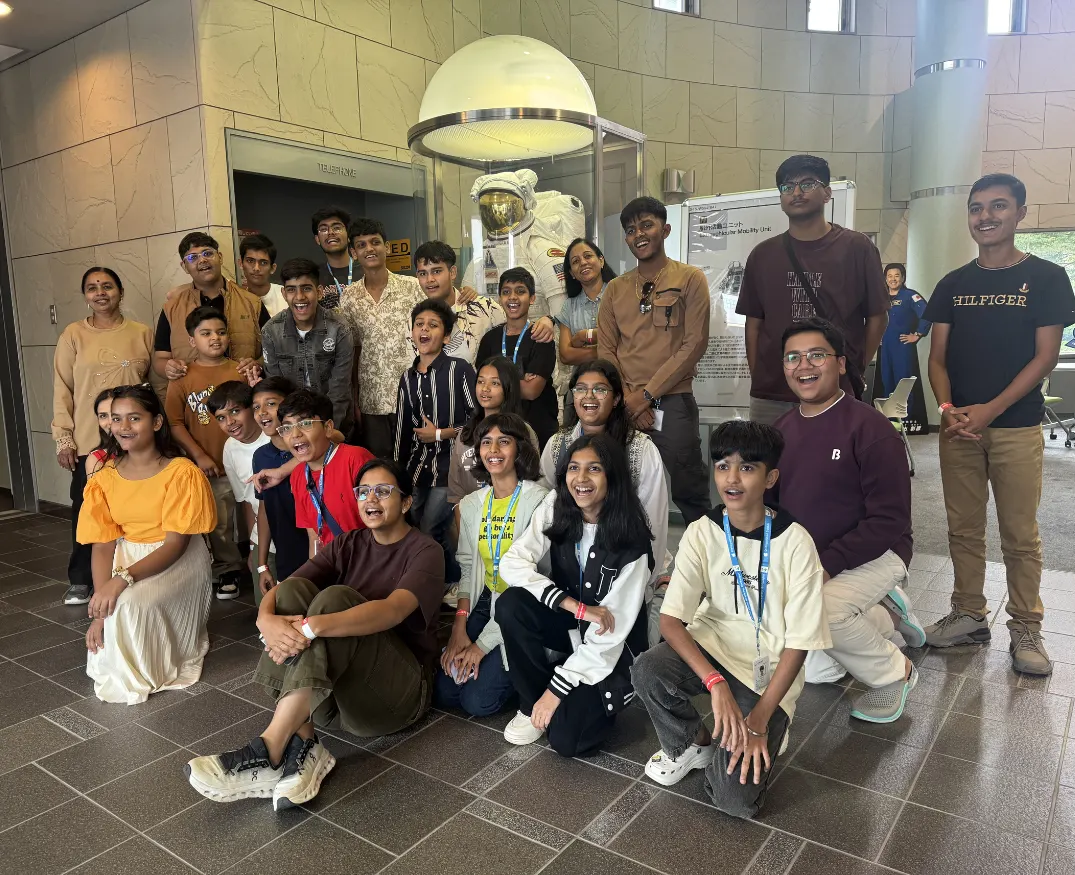
Educational tour in India planning usually settles around a handful of destinations that offer strong learning value along with practical safety and accessibility.
Delhi
Between national monuments, museums, and government institutions, Delhi is one of the strongest choices for a school educational tour focused on history and civics - Parliament House, national museums, and Mughal-era sites are all within reach of each other.
Jaipur
Forts, palaces, and traditional crafts give students a genuine, hands-on look at Rajasthan's history and architecture, with block-printing and gemstone-cutting workshops adding a practical layer to the trip. Schools looking for a North India group tour package often start here.
Agra
The Taj Mahal, Agra Fort, and Fatehpur Sikri together make this a core stop for anyone studying medieval Indian architecture.
Ahmedabad
Textile heritage, Sabarmati Ashram, and a solid science centre make Ahmedabad a well-rounded choice for a mixed history-and-science tour, and a popular stop on a West India group tour package.
Mumbai
Financial institutions, film studios, and science centres make this a good pick for career-awareness trips, especially for senior students leaning toward commerce or media.
Bengaluru
With its concentration of science and technology institutions, Bengaluru is often the first choice for a STEM-focused student educational tour, and several research institutes run structured student visits - much like the ISRO campuses covered in our ISRO vs NASA student tour comparison.
Hyderabad
Golconda Fort covers the history side, and the city's technology parks cover the science side - a rare combination in one trip.
Surat
Diamond and textile industries offer practical, close-up exposure for senior students studying commerce or industrial processes.
Kolkata
Colonial-era architecture and museums, including the Indian Museum's structured programmes for school groups, make Kolkata strong for history and culture-focused tours, and a natural fit within an East India group tour package.
Kerala
Backwaters, wildlife sanctuaries, and plantations make this the natural choice for ecology-focused tours, with plenty of direct exposure to biodiversity and sustainable farming, typically arranged as part of a South India group tour package.
Himachal Pradesh
Mountain geography paired with adventure activities makes this a strong option for schools wanting to combine geography lessons with outdoor skill-building, and it fits well alongside a Central India group tour package for schools covering multiple regions in one academic year.
Safety Measures for School Educational Tours
Safety isn't something to work out after the itinerary is finalised - it should be the first thing schools plan for, not the last. A few non-negotiables, many of which our Safety & Security guidance for mentors covers in more detail:
| ✓ A verified adult-to-student supervision ratio, adjusted for the age group and destination |
| ✓ Pre-checked transport with licensed drivers and roadworthy vehicles |
| ✓ A first-aid kit and a trained staff member on every trip, no exceptions |
| ✓ Emergency contact protocols shared with parents in advance, with a clear point of contact throughout |
| ✓ Headcount checks at every stop, not just at departure and arrival - crowded locations especially |
| ✓ A weather and location risk assessment done before the itinerary is locked in, with a backup plan ready |
Important Note: If a tour operator can't give a straight answer on supervision ratios, medical support, or emergency protocols, that's a reason to walk away, no matter how good the itinerary looks otherwise.
How Schools Can Plan a Successful Educational Tour
Define Learning Objectives
Decide what students should learn first, then pick the destination - not the other way around. "Understand Mughal architecture" or "observe a working ecosystem" should shape every decision that follows.
Select Appropriate Destination
Match the location to the subject, the age group, and how much time is available. A destination that's educationally rich but logistically hard for younger students probably isn't the right call, however appealing it looks on paper.
Budget Planning
Factor in transport, accommodation, meals, entry fees, guide charges, and a contingency for the unplanned. Itemised, transparent budgeting saves everyone - the school and the parents - from surprises later.
Student Safety
Supervision ratios, medical support, emergency protocols - all of it needs to be locked in early, not finalised the week before departure.
Permissions
Get signed parental consent and, where the school requires it, formal management approval, well before the travel date.
Transportation
Check vehicle capacity, driver credentials, insurance, and maintenance status before confirming anything.
Accommodation
For multi-day trips, hygiene, security, and how close the stay is to the planned sites all need to be verified before booking.
Emergency Planning
Have a written plan for medical emergencies, a lost student, or a sudden change in itinerary - and make sure every staff member on the trip has actually seen it, not just the trip coordinator.
Post Tour Activities
A reflection session, a short presentation, or a written assignment turns the trip into something with measurable academic value instead of just a nice memory.
Common Mistakes to Avoid:
| ✗ Picking a destination before deciding what students should actually learn |
| ✗ Underestimating how much supervision a large group really needs |
| ✗ Skipping a written emergency protocol |
| ✗ Not confirming vehicle and driver credentials in advance |
| ✗ Ignoring feedback from the last tour when planning the next one |
Choosing the Right Educational Tour Company in India
A good educational tour company in India does more than book transport and hotels. Worth checking for:
| ✓ A curriculum-aligned itinerary - not a standard sightseeing package with "educational" tacked onto the name |
| ✓ Transparent safety protocols and transport partners with a real track record of working with school groups |
| ✓ Coordinators who've actually managed large student groups before, not just adult tourists |
| ✓ Clear, itemised pricing with nothing added later |
| ✓ References from other schools who've used them more than once |
Why Schools Choose EduTour for Educational Tours
Schools working with EduTour consistently point to two things when asked why they keep coming back: itineraries built around actual learning objectives, and a safety record they trust. Logistics, transport, and accommodation are all built around the learning goal first - not squeezed in around a pre-set sightseeing route.
Educational Tour Packages in India
Educational tour packages for schools vary a fair amount depending on destination, duration, group size, and how much guided learning is actually built into the itinerary. When comparing school tour packages in India, it's worth looking past the headline price. Guided sessions, safety arrangements, meals, and post-tour support all affect what a package is really worth - not just the number quoted upfront.
Conclusion
Educational tours aren't a break from learning - they're an extension of it. The benefits of educational tours for school students reach well past any single subject, touching confidence, communication, independence, and curiosity in ways a classroom on its own simply can't. For schools planning the next trip, the priority stays the same: tie the destination to a clear learning goal, get safety right from the start, and follow up afterward so students actually connect the experience back to what they studied.
Ready to plan your school's next educational tour? Contact EduTour today at +91 9694020905 to build an itinerary around your students' actual learning goals.
Key Takeaways
| ✓ Educational tours turn textbook concepts into real, observed experiences, improving both understanding and retention. |
| ✓ The benefits of educational tours extend beyond academics to confidence, teamwork, communication, and independence. |
| ✓ India offers strong destinations for educational tour planning - from Jaipur and Agra for history to Bengaluru and Kerala for science and ecology. |
| ✓ Safety planning, defined learning objectives, and post-tour follow-up are what separate a well-run school educational tour from a purely recreational trip. |
| ✓ Choosing the right educational tour company in India matters as much as choosing the destination. |
Frequently Asked Questions (FAQs)
Q1. What are educational tours?
Educational tours are planned trips outside the classroom, designed to connect curriculum topics with real-world environments such as museums, historical sites, or industries, so students learn through direct observation rather than passive instruction.
Q2. Why are educational tours important for school students?
They help students hold on to concepts longer, build confidence and independence, and get exposed to environments and career paths a classroom alone can't fully show them.
Q3. What is the ideal age for students to go on educational tours?
There isn't one fixed age - tours can work for almost any grade, as long as the destination, activity level, and duration are matched to what that age group can actually handle and understand.
Q4. How long should a school educational tour be?
That depends on the objective and the budget. Day trips work well for local museums or historical sites, while multi-day trips make more sense for distant destinations offering broader exposure.
Q5. What safety measures are essential during a school tour?
Verified transport, a proper supervision ratio, first-aid support, emergency contact protocols, and regular headcounts at every stop - not just at the start and end of the day.
Q6. How do educational tours differ from regular school trips?
Educational tours are planned around specific learning objectives tied to the curriculum, while a regular school trip might be purely about recreation with no structured academic purpose behind it.
Q7. Which are the best educational tour destinations in India?
Delhi, Jaipur, Agra, Bengaluru, Kerala, and Himachal Pradesh come up most often, each offering a different mix of historical, scientific, or ecological value.
Q8. How much do educational tour packages cost in India?
Costs shift quite a bit based on destination, duration, group size, and what's included - guided sessions, accommodation, transport - so it's worth comparing itemised packages rather than a single flat number.
Q9. How can schools plan a successful educational tour?
Start with clear learning objectives, pick a destination that actually fits them, lock in safety and budget early, and follow up with a reflection activity once students are back.
Q10. What should schools look for in an educational tour company?
A real track record with school groups, honest safety protocols, itineraries tied to the curriculum, and pricing that's clear from the start rather than added to later.
Latest Articles
- ISRO vs NASA Student Tour: Which Is Best for Your School in 2026?
- ISRO Tour for Students: Everything You Need to Know
- NASA Group Tour for Students: A Detailed Guide for Schools and Colleges
- Japan Tour Packages for Students: A Complete Planning Guide
- Dubai Tour Packages for Students: What Schools Should Know