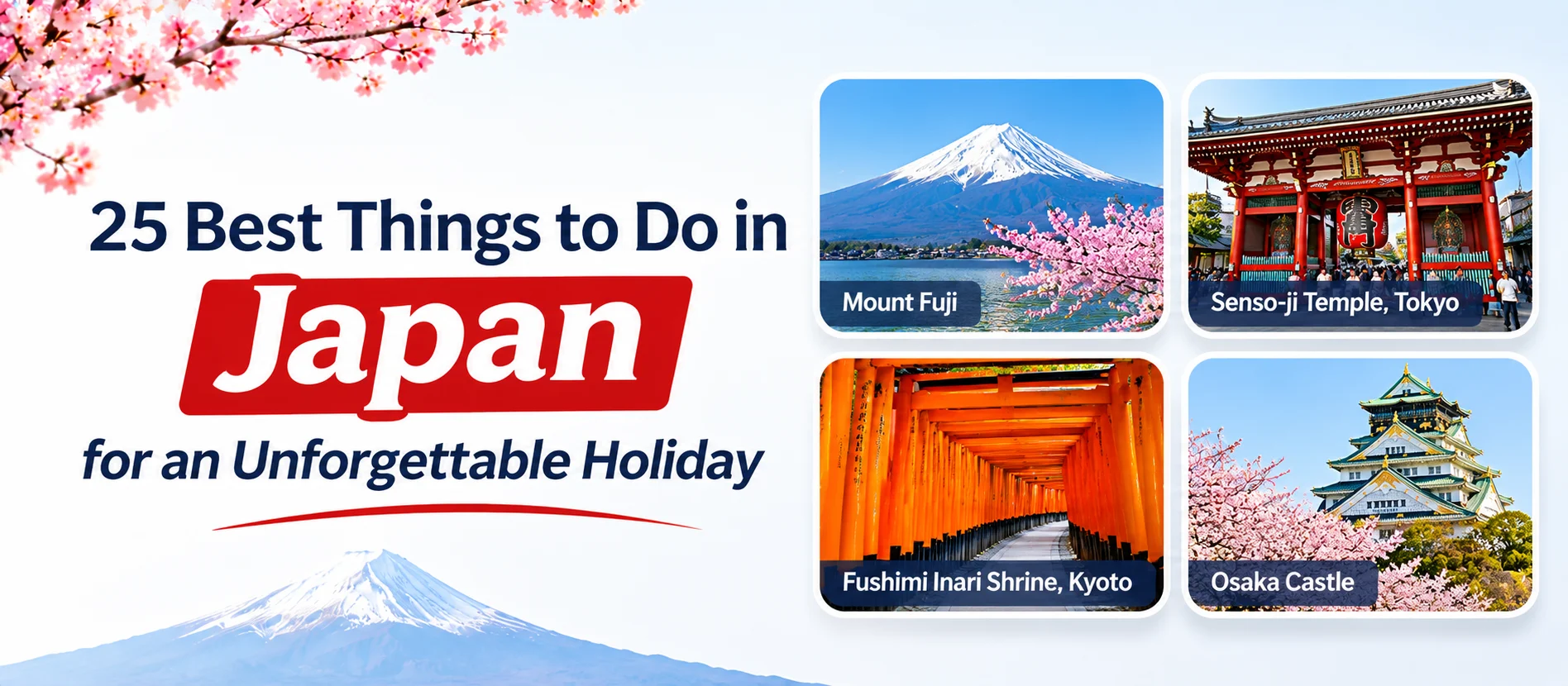
25 Best Things to Do in Japan
1
Spend Time Exploring Tokyo
Location: TokyoRecommended time: 2–3 days
Tokyo is a good place to begin a holiday in Japan, particularly for first-time visitors. The city has several different neighbourhoods, and each offers something worth exploring.
Asakusa gives visitors a glimpse of traditional Tokyo, while Shibuya and Shinjuku show the city's modern side. Akihabara is popular among anime and gaming fans, and Harajuku attracts visitors interested in fashion and street culture.
Some places worth visiting include:
- Senso-ji Temple in Asakusa.
- Shibuya Scramble Crossing.
- Tokyo Tower.
- Tokyo Skytree.
- Meiji Jingu Shrine.
- Akihabara.
- Shinjuku Gyoen National Garden.
A useful tip: Tokyo is large, so plan sightseeing by neighbourhood. Visiting Asakusa, Skytree and nearby attractions on the same day can save considerable travel time.
2
Visit Kyoto's Famous Temples and Shrines
Location: KyotoRecommended time: 2 days
Kyoto is a favourite among visitors who want to see Japan's historical side. The city has preserved many of its temples, shrines, gardens and traditional neighbourhoods.
Kinkaku-ji, commonly known as the Golden Pavilion, is one of its most recognised attractions. Fushimi Inari Taisha is another popular stop, known for the long paths lined with red torii gates.
Other places worth adding to your visit include Kiyomizu-dera, Gion and Ryoan-ji.
What makes Kyoto special?
- Traditional Japanese architecture.
- Historic Buddhist temples and Shinto shrines.
- Tea houses and cultural workshops.
- Traditional streets and local shops.
- Seasonal gardens and cherry blossoms.
If you want to visit the popular temples without dealing with the largest crowds, start your sightseeing early in the morning.
3
Enjoy the Scenery Around Mount Fuji
Location: Yamanashi and ShizuokaRecommended time: 1–2 days
Mount Fuji is one of the most recognisable symbols of Japan. The surrounding region has beautiful lakes, mountain viewpoints and small towns that are worth exploring.
Lake Kawaguchiko is a popular place for photography, especially on clear mornings when Mount Fuji can be seen across the water.
You can also visit Chureito Pagoda, Oishi Park, Oshino Hakkai and the Mount Fuji Fifth Station.
Things to do around Mount Fuji:
- Enjoy lakeside walks.
- Take photographs of the mountain.
- Visit traditional villages.
- Explore local shops and cafes.
- Take a sightseeing trip around the Fuji Five Lakes.
Important travel tip: Mount Fuji is not visible every day. Clouds can cover the mountain even when the weather appears pleasant. Keep some flexibility in your sightseeing schedule.
4
Try Authentic Japanese Food
Location: Tokyo, Osaka, Kyoto and other citiesRecommended time: Throughout your holiday
Food is one of the best parts of travelling in Japan. Each region has its own specialities, and many visitors enjoy trying different dishes rather than eating at the same type of restaurant every day.
Sushi, ramen, tempura, udon, soba and Japanese curry are popular choices. Osaka is particularly well known for takoyaki and okonomiyaki.
Kyoto is a good place to try traditional Japanese meals, including seasonal dishes and matcha desserts.
Some dishes to try:
- Sushi and sashimi.
- Japanese ramen.
- Tempura.
- Takoyaki.
- Okonomiyaki.
- Udon noodles.
- Matcha ice cream.
- Japanese curry.
If you have food allergies or follow a special diet, check ingredients before ordering. Smaller restaurants may have limited English-language menus.
5
Walk Through Arashiyama Bamboo Grove
Location: Western KyotoRecommended time: 2–3 hours
Arashiyama is one of Kyoto's most visited areas, and its bamboo grove is the main reason many tourists come here.
The walking path passes between tall bamboo plants, creating a setting quite different from the busy streets of central Kyoto.
There is more to see in this area than the bamboo grove alone. Tenryu-ji Temple, Togetsukyo Bridge and the surrounding riverside streets are also worth visiting.
A morning visit is usually a better choice if you prefer fewer crowds and more time for photographs.
6
Travel on Japan's Shinkansen Bullet Train
Location: Major cities across JapanRecommended time: Depends on the route
Travelling on the Shinkansen is an experience many visitors look forward to. Japan's high-speed railway connects several major cities and makes intercity travel convenient.
Popular routes include Tokyo to Kyoto, Tokyo to Osaka and Osaka to Hiroshima.
The trains are known for punctual operations, comfortable seating and convenient connections.
Why include it in your holiday?
- It saves time on long-distance journeys.
- It offers comfortable intercity travel.
- It makes multi-city itineraries easier.
- It provides a chance to experience Japanese railway culture.
Before booking, compare individual tickets with the Japan Rail Pass. A rail pass is not necessarily cheaper for every itinerary.
7
Spend a Day at Tokyo Disneyland or DisneySea
Location: Urayasu, ChibaRecommended time: One full day per park
Families and theme park lovers should consider adding Tokyo Disneyland or Tokyo DisneySea to their holiday.
Both parks have themed attractions, rides, entertainment and restaurants. DisneySea is particularly known for its detailed themed areas and attractions based around the sea and exploration.
Book tickets through official channels and check the park calendar before selecting your date.
For families, it is better to keep an entire day free rather than trying to combine the park with several other sightseeing stops.
8
Try Osaka's Famous Street Food in Dotonbori
Location: OsakaRecommended time: 2–3 hours
Dotonbori is one of Osaka's most popular areas for food and evening sightseeing.
The district is known for its bright signboards, restaurants and busy streets. Visitors can try takoyaki, okonomiyaki and other local specialities while walking around the canal.
Shinsaibashi Shopping Street is also nearby, making it easy to combine food and shopping in one visit.
If you enjoy trying local dishes, keep an evening free for Dotonbori.
9
Take Part in a Japanese Tea Ceremony
Location: KyotoRecommended time: 1–2 hours
A traditional Japanese tea ceremony is a good way to understand the country's customs and hospitality.
The activity focuses on preparing and serving matcha, with attention given to the tea utensils, movements and etiquette.
Many cultural centres in Kyoto offer sessions for overseas visitors, including short introductions in English.
You may also have the opportunity to try Japanese sweets served with the tea.
It is a worthwhile activity for travellers who want something beyond ordinary sightseeing.
10
Visit Nara Park and See Its Famous Deer
Location: NaraRecommended time: 3–4 hours
Nara makes an easy day trip from Kyoto or Osaka. Its most famous attraction is Nara Park, where deer roam freely around the grounds.
The area is also home to Todai-ji Temple, which houses the Great Buddha statue.
You can spend time walking through the park, visiting the temple and exploring nearby historical streets.
Places to include:
- Nara Park.
- Todai-ji Temple.
- Kasuga Taisha Shrine.
- Naramachi historic district.
Follow the local rules around the deer. They are accustomed to visitors, but they should not be chased or fed unsuitable food.
11
Stay at a Traditional Japanese Ryokan and Enjoy an Onsen
Location: Hakone, Beppu, Kusatsu and other hot spring townsRecommended time: One night or more
A stay at a traditional Japanese inn, known as a ryokan, is quite different from staying in a standard hotel.
Many ryokans have Japanese-style rooms, tatami flooring, traditional meals and access to hot spring baths.
Onsen bathing is an important part of Japanese culture. Hakone, Beppu and Kusatsu are well-known destinations for hot spring stays.
Before visiting a public onsen, check its bathing rules and tattoo policy. Most traditional shared baths require guests to bathe without swimwear.
12
Visit Hiroshima's Peace Memorial Park
Location: HiroshimaRecommended time: 3–4 hours
Hiroshima is an important destination for visitors interested in world history.
The Peace Memorial Park commemorates the atomic bombing of August 6, 1945. The park includes the Atomic Bomb Dome, the Peace Memorial Museum and several memorial monuments.
A visit offers an opportunity to understand the historical events and their effects on the people of Hiroshima.
Allow enough time for the museum, as its exhibitions include personal accounts and sensitive historical material.
13
Explore the Old Streets of Takayama
Location: Gifu PrefectureRecommended time: 1–2 days
Takayama offers a quieter side of Japan. Its old town has preserved wooden merchant houses, traditional shops and narrow streets.
The Sanmachi Suji area is a good place to walk, browse local products and try regional food.
Visitors can also explore morning markets and nearby countryside attractions.
If you enjoy traditional architecture and smaller Japanese towns, Takayama is worth considering.
14
Visit Shirakawa-go Village
Location: Gifu PrefectureRecommended time: Half a day
Shirakawa-go is a historic village recognised for its gassho-zukuri houses. These buildings have steep thatched roofs designed to withstand heavy snowfall.
The village is a UNESCO World Heritage Site and offers a glimpse into traditional rural life in Japan.
You can walk through Ogimachi Village, visit selected traditional houses and enjoy views from the observation point.
Winter is particularly popular because of the snow-covered houses, but the village is attractive throughout the year.
15
Explore Anime and Gaming Culture in Akihabara
Location: TokyoRecommended time: 2–4 hours
Akihabara is popular among visitors interested in anime, manga, electronics and gaming.
The district has specialist shops selling collectibles, video games, electronic products and character merchandise.
Even if you are not an anime fan, it is an interesting place to see a different side of modern Japanese culture.
You can also explore nearby electronics stores and themed cafes.
16
Take a Hakone Ropeway Ride and Lake Ashi Cruise
Location: Hakone, KanagawaRecommended time: Half to one full day
Hakone is a popular destination for travellers who want to spend time outside Tokyo.
The area is known for mountain scenery, hot springs, Lake Ashi and views of Mount Fuji on clear days.
The Hakone Ropeway passes over volcanic terrain near Owakudani. Visitors can also take a sightseeing cruise on Lake Ashi.
If you plan to visit Hakone, check the operating conditions of the ropeway and boats before departure. Weather and volcanic activity can sometimes affect services.
17
Explore Osaka Castle
Location: OsakaRecommended time: 1.5–2.5 hours
Osaka Castle is an important historical landmark associated with the late sixteenth-century unification of Japan.
The castle museum provides information about its history and the people connected with it.
The surrounding park is also worth exploring, especially during cherry blossom season.
It is a good stop for visitors interested in Japanese history, architecture and photography.
18
Try a Kimono Experience in Kyoto
Location: KyotoRecommended time: 2–3 hours
Wearing a kimono is a popular activity among international visitors to Kyoto.
Several local rental shops provide traditional clothing, dressing assistance and optional photography services.
Many visitors choose to wear a kimono while exploring historic streets around Gion and Kiyomizu-dera.
If you plan to try this activity, choose comfortable footwear and check the rental return time before booking.
19
Enjoy the Views from Tokyo Skytree
Location: Sumida, TokyoRecommended time: 1.5–2 hours
Tokyo Skytree is one of the tallest structures in Japan and a major sightseeing attraction.
Its observation decks offer wide views across the city. On clear days, visitors may also see Mount Fuji in the distance.
The complex includes shopping and dining options, so you can spend some extra time in the surrounding area.
Book an observation deck ticket in advance if you are visiting during a busy travel period.
20
Spend a Few Days in Okinawa
Location: Okinawa PrefectureRecommended time: 3–5 days
Okinawa offers a different holiday experience from Tokyo, Kyoto and Osaka.
The islands are known for beaches, clear water, marine life and the distinctive Ryukyu cultural heritage.
Visitors can enjoy snorkelling, coastal sightseeing, local food and visits to Churaumi Aquarium.
Okinawa is particularly suitable for families, couples and travellers who want to include a beach break in their Japan holiday.
21
Enjoy Cherry Blossom Season
Location: Tokyo, Kyoto, Osaka and other regionsRecommended time: March–April, depending on the region
Cherry blossom season is one of Japan's best-known seasonal attractions.
People gather in parks and gardens to enjoy the flowering trees, take photographs and spend time outdoors. This tradition is called hanami.
Popular locations include Ueno Park, Chidorigafuchi, Maruyama Park and Osaka Castle Park.
Flowering dates change every year, so check the latest forecast before fixing your travel dates.
22
Try Skiing in Hokkaido
Location: HokkaidoRecommended time: 3–5 days
Hokkaido is a popular winter destination for skiing and snowboarding.
Niseko, Furano and Rusutsu are among the recognised ski areas. They offer facilities for different experience levels, including beginners.
You can also enjoy local seafood, hot springs and winter festivals during your stay.
If you are new to skiing, consider taking lessons and renting suitable equipment from a recognised provider.
23
Walk Through the Torii Gates at Fushimi Inari Taisha
Location: KyotoRecommended time: 2–3 hours
Fushimi Inari Taisha is one of Kyoto's most recognisable shrines.
Its walking paths pass through thousands of red torii gates that continue up Mount Inari.
Visitors can explore the main shrine, walk along the lower paths or continue further up the mountain.
The shrine is dedicated to Inari, a deity associated with rice, prosperity and business.
A morning visit is a good choice for travellers who want more comfortable walking conditions.
24
Visit teamLab's Digital Art Exhibitions
Location: Tokyo and other exhibition locationsRecommended time: 2–3 hours
teamLab is known for its digital art installations, where light, sound and interactive technology are used to create unusual exhibition spaces.
These exhibitions appeal to visitors interested in modern art, photography and technology.
Before visiting, check the official website for current exhibitions, locations, admission times and ticket availability. Different installations may have different entry requirements.
25
Take a Day Trip to Nikko
Location: Tochigi PrefectureRecommended time: One full day
Nikko is a good choice for visitors who want to combine Japanese history with natural scenery.
Toshogu Shrine is the area's main historical attraction and forms part of the UNESCO World Heritage-listed Shrines and Temples of Nikko.
Other places worth visiting include Shinkyo Bridge, Kegon Falls and Lake Chuzenji.
Nikko can be visited as a day trip from Tokyo, although an overnight stay gives you more time to explore the surrounding area.
.webp)