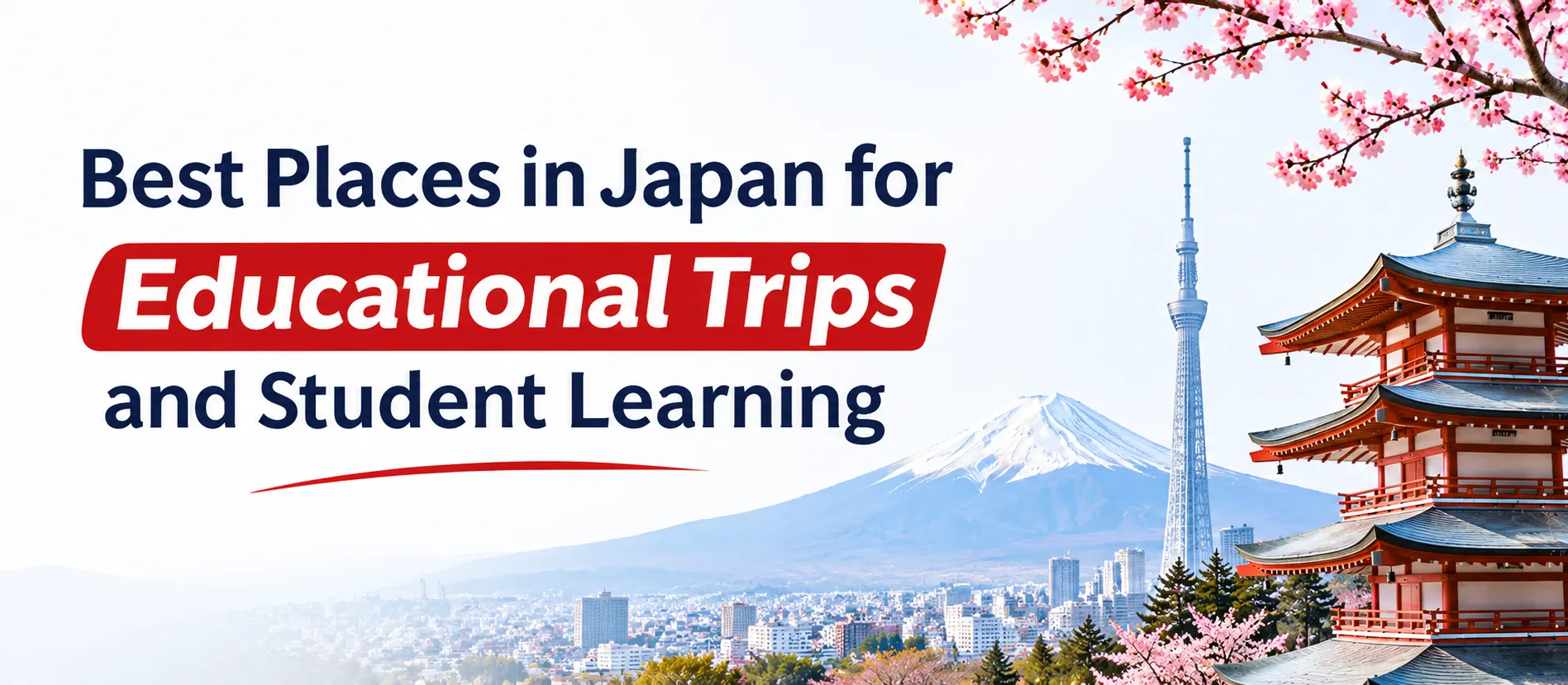
Best Places in Japan for Educational Trips and Student Learning
15Educational Places
6Learning Cities
7Day Sample Plan
10Subject Themes
Japan is a great destination for students who want to understand science, technology, history and different cultures through real-world experiences. The country has some interesting museums, research centres, historical monuments and traditional learning activities that can make an international school trip more meaningful.
From exploring robotics in Tokyo to understanding space research in Tsukuba and Japanese traditions in Kyoto, students can study several subjects during one trip.
The educational places in Japan offer learning opportunities for school students, college groups and international educational institutions. Schools can plan visits around subjects such as science, engineering, geography, history, environmental studies and cultural education.
For foreign schools planning a student trip, Japan also offers opportunities for school exchanges, cultural workshops and group learning activities.
This guide covers the best places to visit in Japan for students, what they can learn at each destination, the recommended visiting time and how schools can plan a useful educational programme.
15 Best Educational Places in Japan for Students
1
Miraikan – National Museum of Emerging Science and Innovation, Tokyo
Best for: Science, robotics, artificial intelligence and space technology.Location: Odaiba, Tokyo.Recommended duration: 3–4 hours.
Miraikan is one of the well-known science museums in Japan. It introduces visitors to scientific research, emerging technologies, space exploration and environmental issues.
Students can understand how science influences daily life and how researchers work on problems related to technology and society.
What students can learn:
- Robotics and artificial intelligence.
- Space exploration.
- Environmental science.
- Scientific research and innovation.
Important: Miraikan is scheduled to remain closed for refurbishment from October 2026 until April 2027. Check its official website before planning a visit.
2
JAXA Tsukuba Space Center, Tsukuba
Best for: Astronomy, space science and aerospace engineering.Location: Tsukuba, Ibaraki.Recommended duration: 2–3 hours.
The JAXA Tsukuba Space Center is a useful destination for students interested in space research. It provides information about Japan's space programmes, satellites and spacecraft.
Students can understand how satellites support communication, weather forecasting and scientific research.
What students can learn:
- Satellite technology.
- Space missions.
- Aerospace engineering.
- Astronaut training and research activities.
Travel tip: Check group booking requirements and visitor access before including this facility in the itinerary.
3
TEPIA Advanced Technology Gallery, Tokyo
Best for: Robotics, automation and engineering.Location: Tokyo.Recommended duration: 1.5–2.5 hours.
TEPIA introduces visitors to advanced technology and its practical applications. It is a suitable destination for students who want to understand robotics, industrial automation and modern engineering.
What students can learn:
- Robotics and automated systems.
- Manufacturing technology.
- Engineering applications.
- The role of machines in industries.
A visit can be followed by a classroom discussion about how automation is changing different industries.
4
National Museum of Nature and Science, Tokyo
Best for: Biology, geology and environmental science.Location: Ueno Park, Tokyo.Recommended duration: 3–4 hours.
This museum is suitable for students studying natural sciences. Its collections cover the history of Earth, biodiversity, fossils, scientific development and the relationship between humans and nature.
What students can learn:
- Evolution and biodiversity.
- Geological history.
- Environmental changes.
- Scientific discoveries.
Teachers can give students a simple observation assignment about fossils, ecosystems and natural history.
5
Tsukuba Science City, Ibaraki
Best for: Scientific research, engineering and technology.Location: Tsukuba, Ibaraki.Recommended duration: 1 full day.
Tsukuba is an important research and education centre in Japan. It has several research institutions and scientific facilities.
Students interested in STEM subjects can learn how researchers work on scientific and technological challenges.
What students can learn:
- Scientific research methods.
- Engineering and technology.
- Space science.
- Research and development.
Schools can combine Tsukuba with a visit to JAXA Space Center, subject to visitor access and scheduling.
6
Tokyo National Museum, Tokyo
Best for: Japanese history, art and archaeology.Location: Ueno Park, Tokyo.Recommended duration: 2–3 hours.
The Tokyo National Museum is an important destination for students interested in Japanese history and traditional art.
Its collections include historical objects, paintings, sculptures, ceramics and textiles. Students can understand how Japanese art and society have changed over different periods.
What students can learn:
- Japanese historical periods.
- Traditional art and craftsmanship.
- Archaeological discoveries.
- Cultural heritage preservation.
7
Edo-Tokyo Open Air Architectural Museum, Tokyo
Best for: Architecture, urban planning and history.Location: Koganei, Tokyo.Recommended duration: 2–3 hours.
This museum displays historical Japanese buildings and provides an opportunity to understand how people lived in earlier periods.
Students interested in architecture and design can compare traditional Japanese buildings with modern construction.
What students can learn:
- Traditional Japanese architecture.
- Historical building materials.
- Changes in residential design.
- Urban development.
8
Hiroshima Peace Memorial Park and Museum, Hiroshima
Best for: World history, peace education and social studies.Location: Hiroshima.Recommended duration: 3–4 hours.
Hiroshima is one of the most important historical places in Japan for students. The Peace Memorial Park and Museum preserve the history of the atomic bombing on August 6, 1945.
Students can understand the impact of war on communities and why peace education remains important.
What students can learn:
- World War II history.
- The consequences of nuclear weapons.
- Humanitarian issues.
- International peace and cooperation.
Teachers should prepare students before visiting because the museum contains sensitive historical information.
9
Kinkaku-ji and Fushimi Inari Taisha, Kyoto
Best for: Japanese culture, religion and architecture.Location: Kyoto.Recommended duration: 4–5 hours for both attractions.
Kyoto is an excellent destination for students interested in Japanese traditions. Kinkaku-ji, also known as the Golden Pavilion, is famous for its architecture and gardens. Fushimi Inari Taisha is recognised for its thousands of red torii gates.
These sites help students understand the importance of Buddhism and Shinto traditions in Japanese society.
What students can learn:
- Japanese religious traditions.
- Temple and shrine architecture.
- Traditional gardens.
- Cultural heritage.
10
Osaka Science Museum, Osaka
Best for: Physics, chemistry and astronomy.Location: Osaka.Recommended duration: 2–3 hours.
The Osaka Science Museum provides students with opportunities to understand scientific concepts through exhibitions and demonstrations.
It is useful for groups studying basic science and its practical applications.
What students can learn:
- Physics and scientific principles.
- Astronomy.
- Electricity and energy.
- Scientific experiments.
11
Osaka Castle, Osaka
Best for: Japanese history and architecture.Location: Osaka.Recommended duration: 1.5–2.5 hours.
Osaka Castle is associated with the history of Japanese unification and the country's feudal period.
Students can explore the historical significance of the castle and understand the role of samurai and military architecture in Japan.
What students can learn:
- Japanese feudal history.
- Samurai culture.
- Historical architecture.
- Political development.
12
Nara Park and Todai-ji Temple, Nara
Best for: Cultural heritage, Buddhism and wildlife.Location: Nara.Recommended duration: 3–4 hours.
Nara is an important destination for understanding traditional Japanese culture. Nara Park is famous for its free-roaming deer, while Todai-ji Temple is known for its Great Buddha statue.
Students can learn about the history of Buddhism in Japan and the preservation of cultural monuments.
What students can learn:
- Buddhist traditions.
- Japanese temple architecture.
- Wildlife and conservation.
- Historical importance of Nara.
13
Toyota Commemorative Museum of Industry and Technology, Nagoya
Best for: Engineering, manufacturing and industrial development.Location: Nagoya.Recommended duration: 2–3 hours.
This museum explains the development of textile machinery and automobile manufacturing. It is particularly useful for students interested in mechanical engineering and industrial technology.
What students can learn:
- Manufacturing processes.
- Mechanical engineering.
- Industrial automation.
- Automobile production.
- Technological development.
Schools can include this museum in an engineering-focused educational programme.
14
Himeji Castle, Hyogo
Best for: History, architecture and heritage conservation.Location: Himeji, Hyogo.Recommended duration: 2–3 hours.
Himeji Castle is a UNESCO World Heritage Site and an important example of traditional Japanese castle architecture.
Students can observe its construction, defensive features and historical design.
What students can learn:
- Japanese castle architecture.
- Historical construction methods.
- Military structures.
- Heritage conservation.
15
Mount Fuji and Hakone
Best for: Geography, geology and environmental studies.Location: Yamanashi and Kanagawa regions.Recommended duration: 1 full day.
Mount Fuji is Japan's highest mountain and an important natural and cultural landmark. The surrounding region offers opportunities for students to study volcanic landscapes, mountain ecosystems and environmental protection.
Hakone also provides opportunities to understand volcanic activity and natural geography.
What students can learn:
- Volcanic formations.
- Mountain ecosystems.
- Environmental conservation.
- Natural resource management.
- The cultural importance of Mount Fuji.
Schools should check weather, seasonal access and road conditions before arranging visits.
How Edutour Can Help with Educational Tours in Japan
Schools planning a Japan school trip often need assistance with destinations, accommodation, transportation and educational activities.
Edutour offers a Japan School Tour Package that combines academic visits with cultural experiences and sightseeing.
The programme features destinations and activities such as:
JAXA Tsukuba Space Center.
Tsukuba science visits.
TEPIA Advanced Technology Gallery.
Robotics-related learning activities.
Tokyo sightseeing.
Kyoto temples and cultural experiences.
Shinkansen high-speed train travel.
Mount Fuji and Hakone visits.
International schools and educational institutions can discuss their preferred travel dates, group size, departure country and academic interests before requesting a customised proposal.
Planning a student trip to Japan? Visit the Japan School Tour Package page to review the programme and enquire about arrangements for your group.
Frequently Asked Questions
Q1. What are the best educational places in Japan for students?
Some popular options include JAXA Tsukuba Space Center, TEPIA Advanced Technology Gallery, the National Museum of Nature and Science, Kyoto temples, Hiroshima Peace Memorial Museum and the Toyota Commemorative Museum. These destinations cover science, engineering, history, architecture and Japanese culture.
Q2. Why should schools organise educational tours in Japan?
Japan offers opportunities to study technology, history, science and traditional culture. Students can visit museums, participate in workshops and interact with local students. These activities help them understand academic subjects through practical experiences outside the classroom.
Q3. How many days are enough for a Japan educational tour?
A seven-day programme can cover Tokyo, Tsukuba, Kyoto, Osaka and selected cultural attractions. Schools interested in visiting Hiroshima or Nagoya should consider 8–10 days. The duration depends on academic objectives, travel distances and the number of planned activities.
Q4. Which places in Japan are suitable for science students?
JAXA Tsukuba Space Center, TEPIA Advanced Technology Gallery and the National Museum of Nature and Science are useful options. Students can study space research, robotics, engineering, biology and scientific development through exhibitions and approved educational activities.
Q5. Are educational tours in Japan suitable for international schools?
Yes. International schools can organise trips around science, technology, history and cultural learning. Programmes can also include school exchanges and traditional workshops. Schools should consider student age, language requirements, group size and advance booking arrangements.
Q6. Can students participate in Japanese school exchange programmes?
Yes. Overseas schools can explore exchange opportunities through the Japan National Tourism Organization and relevant educational institutions. Activities may include classroom interaction, cultural discussions and sports. Participation depends on host-school availability and advance coordination.
Q7. What is the best month for a Japan school trip?
March to May and September to November are popular periods for school travel. Spring offers cherry blossom experiences, while autumn is suitable for historical sightseeing and outdoor activities. Schools should also consider their academic calendar and local public holidays.
Q8. How much does a student educational tour to Japan cost?
The price depends on the departure country, airfare, hotel category, group size, transportation, meals and educational activities. Schools should request an itemised quotation based on their requirements. Visa, insurance and optional activities should also be considered.
Q9. What can students learn during a Japan educational tour?
Students can study robotics, aerospace engineering, biology, geography, Japanese history, architecture and environmental conservation. Cultural workshops and school exchanges also provide opportunities to understand local traditions and communicate with students from another country.
Q10. How can an international school book a Japan educational tour?
Schools should prepare their departure country, preferred dates, student count, teacher count and academic interests. They can then contact an educational tour organiser to discuss the itinerary, accommodation, transportation, workshops and other arrangements.
.webp)